Face Coverings
Face Coverings Clearance
Face Coverings for the General Public to be worn in general public environments:
ORDER NOW WHILST AVAILABLE
ORDER BEFORE 12 FOR NEXT BUSINESS DAY DELIVERY
Face Coverings for the General Public to be worn in general public environments:
ORDER NOW WHILST AVAILABLE
ORDER BEFORE 12 FOR NEXT BUSINESS DAY DELIVERY
A face covering is a cloth or disposable layer that covers the nose and mouth to reduce the spread of droplets from the wearer. It is not PPE and not a medical device, so it isn’t tested to protect the wearer against dust, fumes or infectious aerosols. Face coverings suit general public settings, not workplace hazards or clinical care.
A face covering is a non-medical item for general use. A medical or surgical face mask is a regulated medical device tested to EN 14683, with measured bacterial filtration and, for Type IIR, splash resistance. Surgical face masks are used in healthcare settings, while face coverings aren’t. Neither gives the sealed protection of an FFP2 or FFP3 respirator.
No. UK government guidance says face coverings are not PPE, which means equipment certified to protect workers or clinicians from specific hazards. Surgical masks and respirators fall into that category; face coverings do not. If your job needs protection, use a certified mask or respirator suited to the hazard.
There is no general legal requirement to wear a face covering in England, and staff aren’t legally required to wear one at work. Face coverings and masks are still expected under infection prevention and control guidance in health and care settings. Rules can differ in Scotland, Wales and Northern Ireland and may change, so check current local guidance.
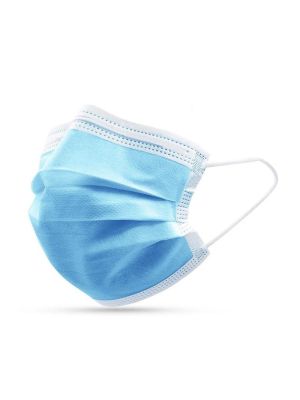
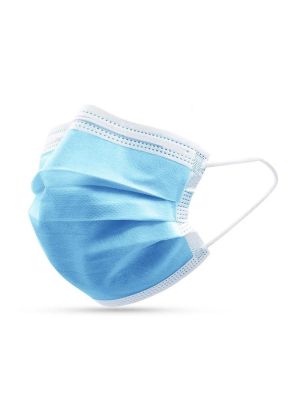
A 3 layer disposable face mask has an outer non-woven layer, a middle filter layer and a soft inner layer. It is designed to reduce the spread of droplets from the wearer and is single-use. Unless it is certified to EN 14683, it is a face covering, not a medical mask, and isn’t a substitute for an FFP respirator.
Colour doesn’t show the protection level. A blue disposable face covering gives no certified protection to the wearer against viruses, dust or fumes. Many certified surgical masks are also blue, so check for EN 14683. For airborne particles, use a properly fitted FFP2 or FFP3 respirator, and for dust choose FFP1, FFP2 or FFP3 as your risk assessment requires.
Usually not. Health and care settings follow infection prevention and control (IPC) guidance and typically require fluid-resistant surgical face masks (Type IIR) for clinical work, or FFP3 respirators for aerosol-generating procedures. A non-medical face covering isn’t enough. Check your employer’s policy, and see our surgical masks and FFP3 masks.
Wash or sanitise your hands, then place the covering over your nose, mouth and chin with the nose wire, if fitted, at the top. Loop the ear straps behind your ears and mould the wire to your nose. Don’t touch the front while wearing it. Remove it by the straps, bin it, then clean your hands again.
Many people choose to wear a face covering in crowded or poorly ventilated places, on public transport, when they have cold symptoms or around vulnerable people. Some venues, events or employers may ask for them. They give limited protection to the wearer, so use an FFP2 or FFP3 respirator if you need higher personal protection.
Fogging happens when warm breath escapes upwards past the top edge of the mask. Pull the mask snugly under your eyes, mould the nose wire if there is one, and wear your glasses so they sit over the top edge. Anti-fog wipes or sprays also help. If breath still escapes, try a different size or style.