FREQUENTLY ASKED QUESTIONS
01: What does FFP1 mean on a mask?
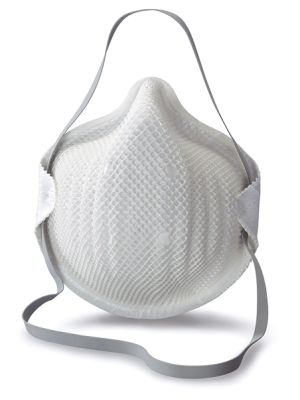
A1. FFP stands for filtering facepiece, meaning the mask itself is the filter. The number shows the filtration class under EN 149: 1 is the lowest, 2 is mid-level and 3 is the highest. An FFP1 mask is a disposable respirator for low-risk dust and mist, with at least 80% filtration efficiency.
02: How much protection does an FFP1 respirator give?
A2. An FFP1 respirator filters at least 80% of airborne particles and allows up to 25% total inward leakage under EN 149. The UK assigned protection factor is 4, meaning it can reduce exposure by up to four times if properly fitted. It is suitable only for low-risk, non-toxic dusts, not hazardous substances.
03: What is the difference between FFP1 and FFP2 masks?
A3. FFP1 masks filter at least 80% of particles with an assigned protection factor of 4. FFP2 masks filter at least 94% with a factor of 10, so they suit finer and more harmful dusts and mists. Choose FFP1 only for low-risk nuisance dust. If you’re unsure, step up to FFP2 and check your risk assessment.
04: What is an FFP1 dust mask suitable for?
A4. An FFP1 dust mask suits low-risk, non-toxic dust, such as light sweeping, garden tidying or general cleaning. It isn’t suitable for hardwood dust, MDF, silica, lead paint, mould or other hazardous materials, which need FFP2 or FFP3. Check the substance’s safety data sheet first.
05: Does an FFP1 mask protect against viruses, mould or paint spray?
A5. No. FFP1 masks are not designed for viruses, mould spores or paint spray. Viruses and fine biological particles need at least an FFP2 or FFP3 mask, and paint vapours need a respirator with gas filters, such as A1. Using an FFP1 mask for these hazards gives a false sense of security.
06: Is an FFP1 mask enough to meet workplace exposure limits?
A6. Only if the dust level is no more than about four times the workplace exposure limit and the dust is low-risk. FFP1 has an assigned protection factor of 4, so it can reduce exposure by up to four times when properly fitted. Check your COSHH assessment, as many dusts need FFP2 or FFP3.
07: Do I need a face fit test for an FFP1 mask?
A7. Yes, if you wear it at work. HSE guidance says all tight-fitting respirators, including disposable FFP masks, should be face fit tested to the wearer. Even at home, check the seal every time by moulding the nose clip and breathing in and out. A beard or stubble stops an FFP1 mask sealing.
08: Which FFP1 face mask is best: 3M, Portwest or Moldex?
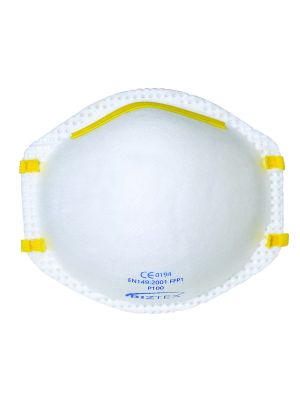
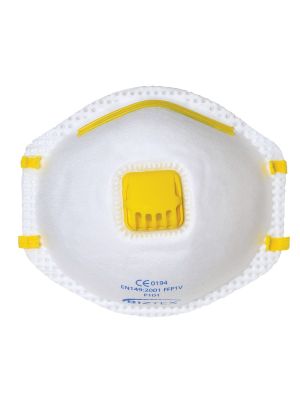
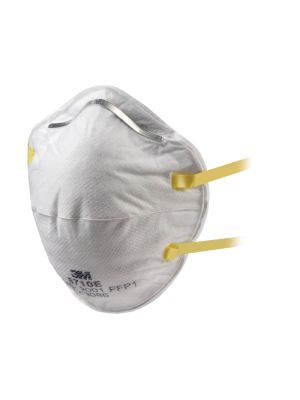
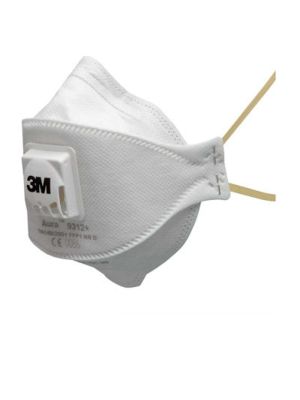
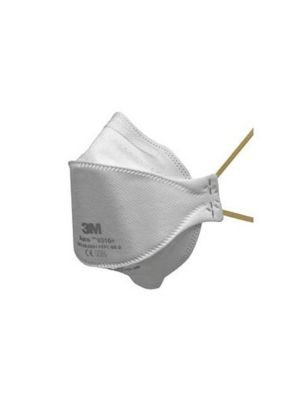
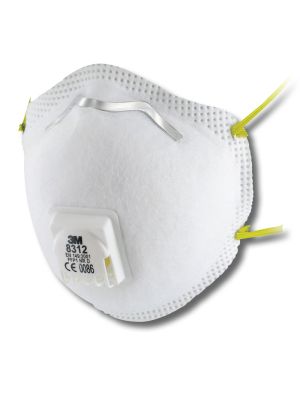
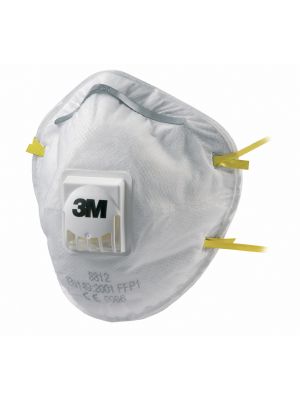
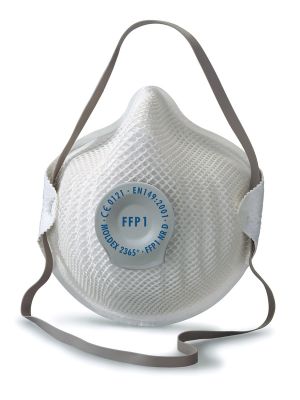
All three certify FFP1 masks to EN 149, so the minimum filtration is the same. Portwest’s P100 and P101 are budget-friendly, 3M offers the 8710E and flat-fold Aura 9310+ and 9312+, and Moldex offers the P1 Classic 2360 and 2365. Choose by fit, comfort and cost per mask, and consider valved versions for longer wear.
09: Can I reuse an FFP1 mask?
Check the marking. NR means non-reusable and the mask should be discarded after one shift, while R means reusable within the manufacturer’s limits. Replace any FFP1 mask that is damp, dirty, damaged or harder to breathe through. Never wash a disposable mask, and store a reused one in a clean, dry bag.
10: How many masks are in an FFP1 box?
FFP1 masks on our page come in boxes of 10 or 20. Valved models are usually sold in 10s and unvalved models in 20s, so box size changes the headline price. Divide the price by the quantity to compare cost per mask, and decide whether you need a valve for longer wear.