Workers' safety is always the most important aspect to ensure smooth operations, prevent workplace accidents, and protect long-term health. It becomes more important when they are working in high-risk areas. These areas have the highest chances of harmful dust, fine particles, and toxic materials.
Selecting the most ideal protective mask to ensure worker’s safety becomes a priority. Using specialized masks with active filtration, secure seals, and durability helps in securing workers’ health. Let’s understand about different dust face masks and their usability.
What Is Considered a Heavy-Risk Work Area?
- Construction and demolition sites
- Mining and quarry operations
- Metal grinding, welding, and foundries
- Cement, stone, and tile cutting units
- Chemical and pharma manufacturing
- Woodworking and sanding workshops
Why These Areas Are High Risk for Workers
In heavy-risk environments, standard disposable dust masks are not sufficient. Without proper protection, workers may face:
- Breathing issues
- Lung irritation and infections
- Silicosis or asthma
Why Standard Dust Masks Are Not Ideal for Heavy-Risk Areas
These are built only for basic, low-risk places. In heavy-risk work areas, it doesn't protect against harmful dust and long-term exposure.
- It comes with low filtration efficiency because it can filter only large, non-toxic dust particles. It does not block fine or hazardous dust.
- It is ineffective against toxic particles like silica, metal fumes, chemical dust, or respirable particles.
- It has a poor face seal and a loose fit. This causes the infiltration of polluted air.
- It does not handle high-risk certifications such as FFP3, P100, or N100.
- It enhances breathing difficulties, pulmonary discomfort, and health complications.
Types of Dust Masks Designed for Heavy-Risk Work Areas
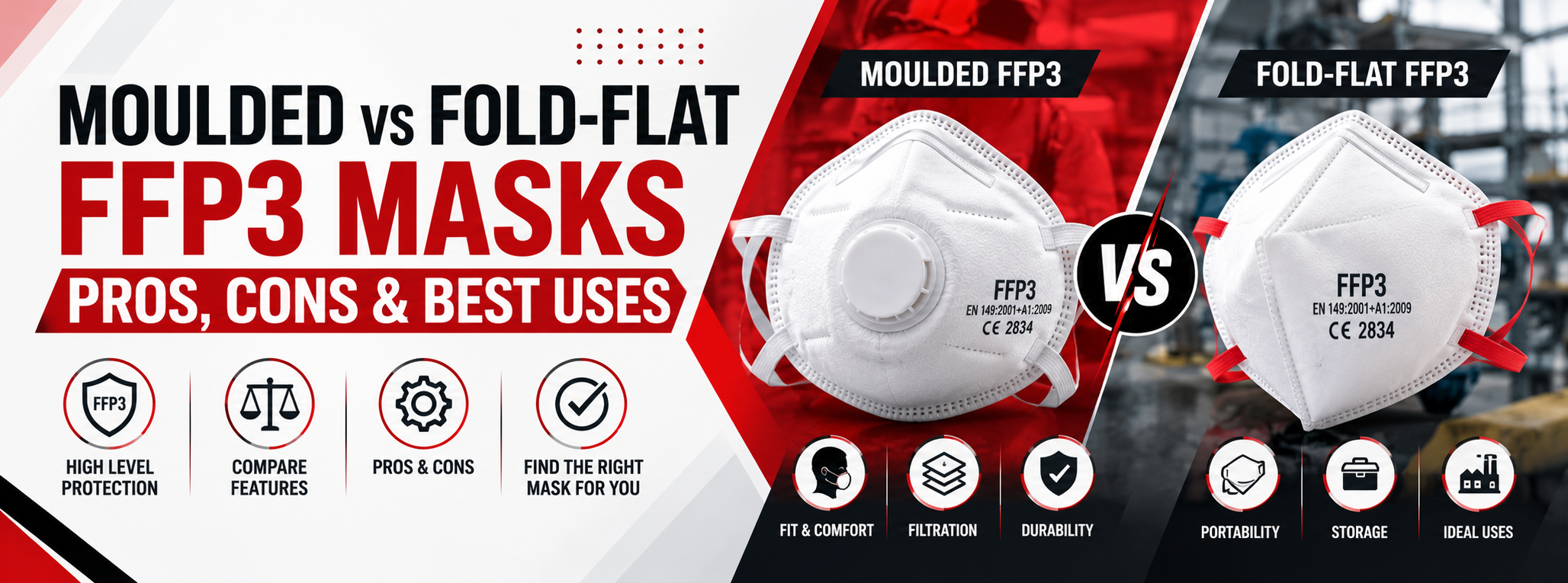
FFP3 Masks
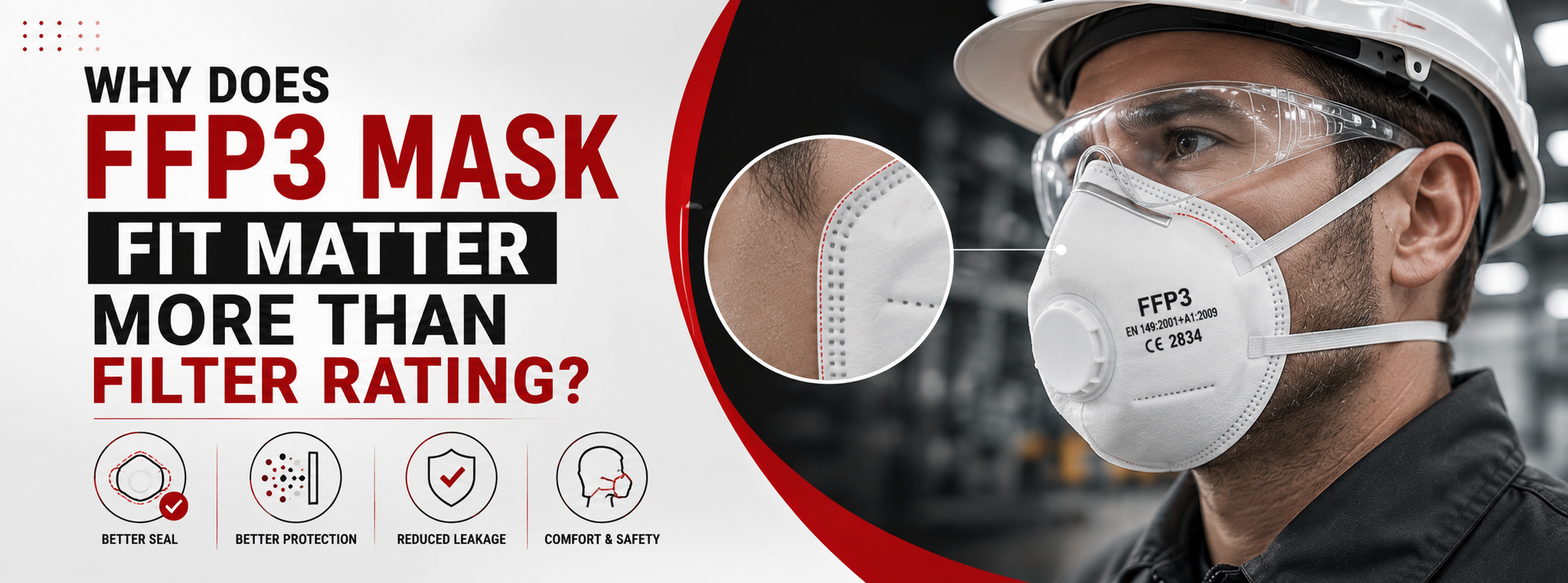
It provides the highest level of disposable dust mask protection and filters upto 99% of airborne particles. It is mainly suitable for toxic dust, silica, metal fumes, and fine particulates. It is used in construction, mining, and demolition work.
Reusable Respiratory Masks
It is designed for long-term and repeated use. It is highly compatible with high-efficiency filters. It provides a better face seal than disposable masks. It is also very cost-effective for heavy industrial environments.
Full Face Masks
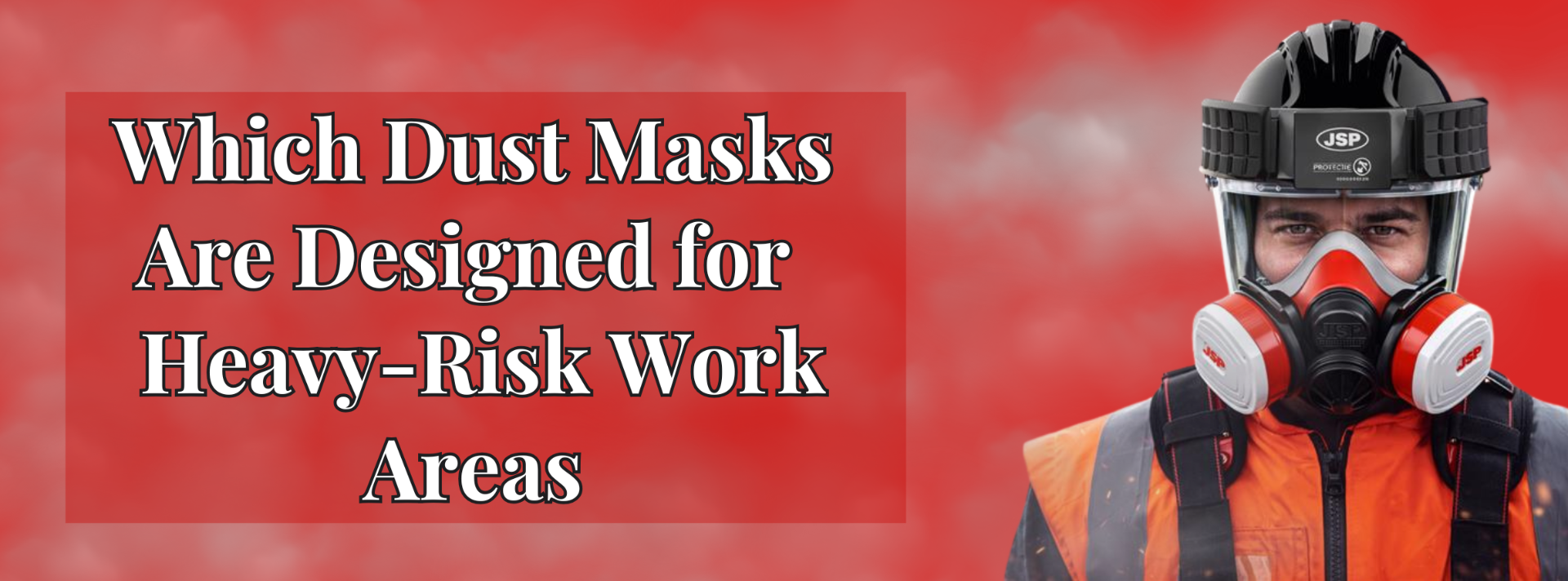
A full face dust mask protects the lungs, eyes, and face. It is mainly used in environments with toxic dust or chemical exposure. It is highly suitable for chemical plants and high-contamination zones.
Half Face Masks
Half face dust mask is used with P3/high-grade particulate filters, which cover the nose and mouth with a tight seal. It is used in grinding, sanding, and for industrial dust exposure.
Mask Filters (High-Efficiency Filters)
It is important for reusable and full-face masks. P3 / P100 filters block fine and hazardous particles, and filters can be selected based on dust and exposure level.
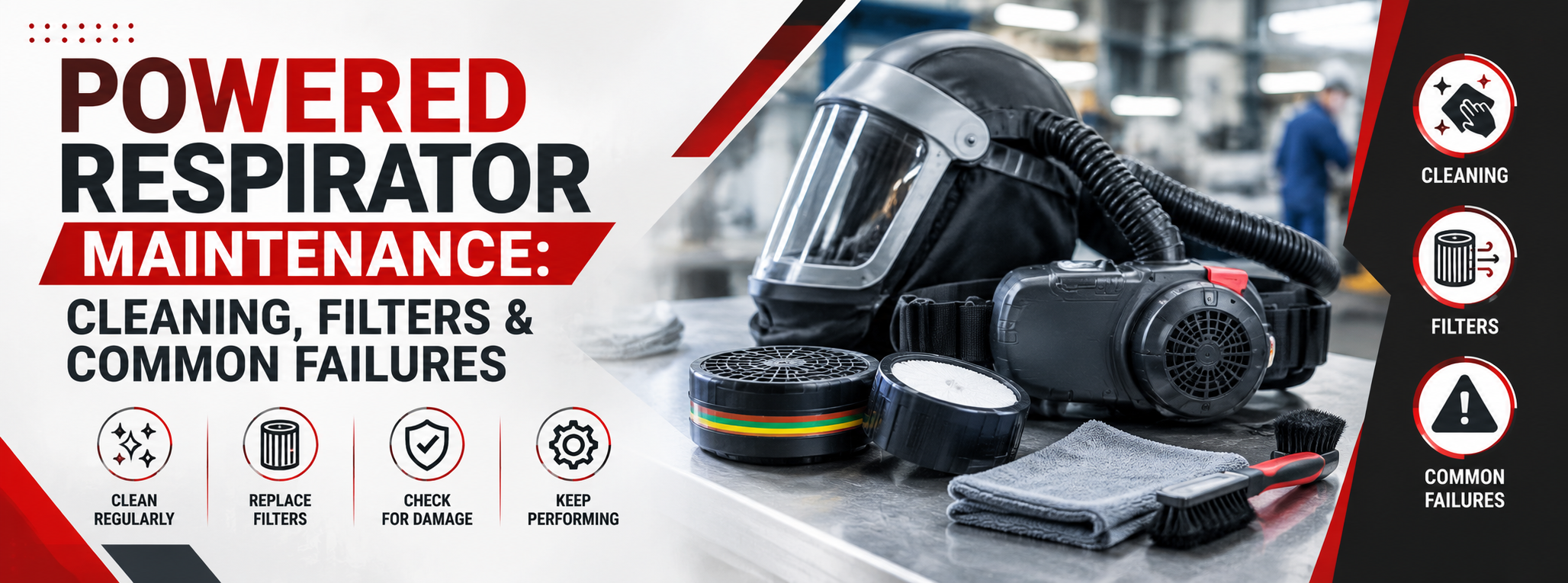
Air-Powered Respirators (PAPR)
It is the best choice for extremely high-risk environments and ideal for long-duration exposure and confined spaces. It comes with battery-powered airflow that reduces breathing resistance. It is used in medical, chemical handling, and high-dust industries.
Key Features to Look for in Heavy-Risk Dust Masks
- Hazardous and fine particles can be filtered using masks of high filtration capacity. These are silica, metal fumes, and toxic dust (FFP3, P3, P100, and N100 rated).
- Strict face seal to avoid air escapes with straps that can be adjusted and a nose bridge.
- The ability to work with high-grade filters, such as replaceable P3 or P100 filters to facilitate permanent protection on an interchangeable basis.
- Reduced breathing resistance due to long working hours and most of the time with exhalation valves or forced air.
- Well-built and sturdy construction to withstand tough industries.
- Standards of check safety, such as CE, EN 149, NIOSH, or similar.
- Ensure that it is suitable for use in heavy-risk setting over a long period.
Respirator Masks vs Standard Dust Masks – What’s the Difference?
| Feature | Respirator Masks | Standard Dust Masks |
|---|---|---|
| Level of Protection | High to very high protection | Low protection |
| Filtration Efficiency | Filters fine, toxic, and hazardous particles (up to 99%+) | Filters only large, non-toxic dust |
| Face Seal | Tight, secure seal with adjustable straps | Loose fit with air leakage |
| Suitable for Heavy-Risk Areas | Yes | No |
| Protection Against Fine Particles | Yes (silica, metal fumes, chemicals) | No |
| Reusability | Reusable (with replaceable filters) or advanced disposable | Mostly single-use |
| Breathing Comfort | Designed to reduce breathing resistance | Can feel restrictive in high dust |
| Certification Standards | FFP3, P100, N100, CE, NIOSH | Usually uncertified or basic rating |
| Duration of Use | Suitable for long working hours | Suitable for short, light tasks only |
| Industries Used In | Construction, mining, chemical, medical, and industrial | Cleaning, DIY, low-dust tasks |
Which Dust Mask Is Best for Bearded Workers?
The seal of dust masks can be interfered with by facial hair, which decreases their protection. The use of tight-fitting respirators, such as usual half-face and full-face masks, should be avoided in case the beard breaches the seal.
The following are suitable dust mask for beards:
- The best option is powering air-purifying respirators (PAPR). It is due to the fact that positive airflow forms a protective layer even in the absence of a tight face seal.
- A dust mask for beards are also appropriate to wear loose-fitting respirators in the form of hoods or helmets. It covers the entire head and neck without depending on a face seal.
How to Choose the Right Dust Face Mask for Heavy-Risk Work Areas
Analyze Work Environment
Understand the requirement for eye protection and the type/contaminant of dust (silica, metal, chemicals, and so on). It is also necessary to evaluate the exposure time and ventilation conditions.
Level of Match Protection against Risk
Choose the mask that is adequately filtered. FFP3 / p100 / n100 of the fine, toxic particles and reusable respirator of reusable, long term sustainability.
Test Certification
The mask should follow NIOSH, CE, EN 149, ISO, or another local standard.
Check Fit and Comfort Level
Check whether the dust face mask has adjustable straps and nose bridges for comfortable use. It is also important to check exhalation valves or low breathing resistance for safe breathing space.
Consider Reusability and Cost
Check for reusable masks and replaceable filters because it is cost effective approach. It is because single-use masks are only suitable for low-risk or short-duration work.
Specialty Needs
For bearded workers, using PAPR or hood respirators is ideal. In the case of chemical or high-fume work, select full face masks. In addition, for constant exposure, choose masks with high airflow comfort.
Conclusion
FFP3 respirators, reusable respiratory mask that has high-efficiency filters, full face dust mask, and powered air-purifying respirators (PAPR) help in worker safety during high-risk conditions. Selecting certified, high-performance protective mask helps in enhancing safety, comfort, and overall protection in high-risk environments.
FAQs
Which dust mask is most appropriate to heavy-risk work?
In the case of heavy-risk work, the most suitable mask is the high-filtration mask, FFP3 dust masks, or certified respirator masks. They offer excellent defense against dusty fine and dangerous particles.
What is the distinction between a dust mask and a respirator mask?
A dust mask provides some protection against larger dusts. On the other hand, a respirator mask offers more protection through filtration and a tight fit to overcome smaller, harmful dust particles.
When is a full face dust mask necessary?
When workers require protection for both the lungs and eyes, a full face dust mask should be used. It is perfect in places where dust concentrations are high or there are toxicants, or chemical exposures.
What are the common mistakes in dust mask usage at high-risk places?
The most frequent errors are improper use of the mask, improper mask fitting, and improper reuse of a disposable mask. Additionally, failure to change filters on time and improper removal of the mask in dusty environments.
What type of dust mask can be used by workers with beards?
The use of powered air purifying respirators (PAPRs) or hood-like respirators may be used because ordinary tight-fitting masks do not cover facial hair effectively.
What is the way workers select the appropriate protective mask in heavy-risk work?
The workers are expected to evaluate the kind of hazard, concentration of dust, length of exposure, and comfort requirements. In order to be properly safe, it is necessary to choose an approved mask that fits the face and is safe.