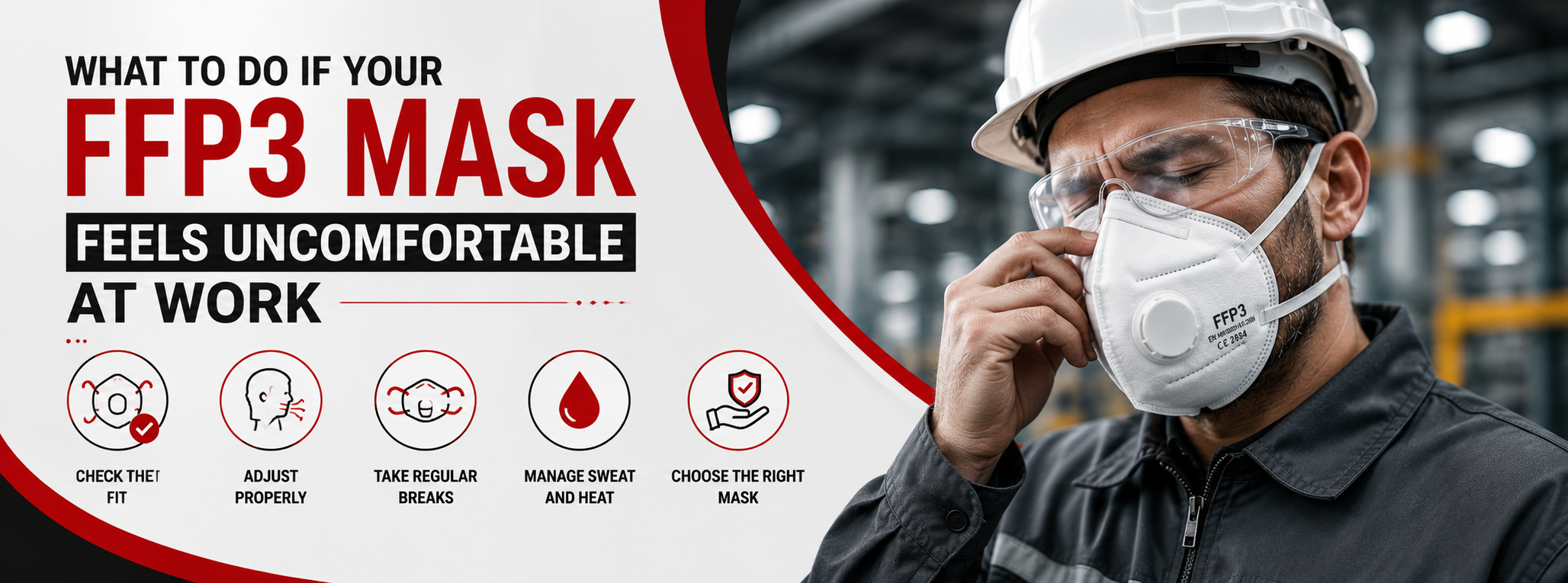

When did you last check the expiry date on your FFP3 mask stock? Most people never do. Masks sit in vans, site huts and store cupboards for years without anyone looking twice. Meanwhile, heat and humidity quietly degrade the straps, nose foam and filter media inside sealed packets. The box looks perfectly fine from the outside. The mask inside may no longer seal.
Major manufacturers confirm a five-year shelf life from the production date, but only under correct storage conditions. If you get the storage wrong, the period will shrink further.
So, how to differentiate shelf life and wear life to get your stock lto ast longer? Read on to find out!
Shelf Life vs Wear Life: Understanding the Difference
These two terms get mixed up constantly. They measure completely different things.
What Shelf Life Means for an FFP3 Mask
Shelf life is how long a sealed, unused mask stays fit for purpose. The clock starts at the manufacturing date, not the purchase date. It ends on the printed expiry date. Bad storage conditions shorten the real life well before the printed date arrives.
What Wear Life Means Once In Use
Wear life, or service life, starts the moment you open the packet. For a disposable FFP3 respirator, that is usually one shift.
Under EN 149,
- masks marked NR are single-use only
- Masks marked R can be reused after cleaning.
Check the label before assuming.
How Long Do FFP3 Masks Last?
The answer changes depending on whether the mask is sealed, opened or reusable.
Average Shelf Life of Unopened FFP3 Disposable Dust Masks
Typical FFP3 dust masks have a three-to-five-year expiry period since production. Some brands even provide a ten-year expiry period for the particulate filters under ideal conditions of storage.
Fresh stock usually comes with a date that is earlier than the one printed on the pandemic-era boxes. This is due to conservative testing and not any weakness in the product.
How Long an FFP3 Mask Lasts Once Opened
Once the seal breaks, the countdown speeds up. Moisture and air begin working on the filter media straight away.
A single-use disposable should go in the bin at the end of the shift. Replace it sooner if breathing gets harder or the mask becomes damp.
Factors That Shorten Lifespan
Storage conditions matter more than most people realise. Here are five factors that might affect the mask’s lifespan:
| Factor | What It Damages | Why It Matters |
|---|---|---|
| Heat above 30C | Straps, foam, adhesives | Straps lose stretch, seal fails |
| Humidity over 80% | Filter media | Electrostatic charge drains away |
| Direct sunlight | Plastic and elastic parts | UV makes materials brittle |
| Compression in bags | Mask shape and nose clip | Deformed masks no longer seal |
| Chemical fumes | Filter and seal surfaces | Contaminates before first use |
How to Find and Read the Expiry Date on Your FFP3 Mask
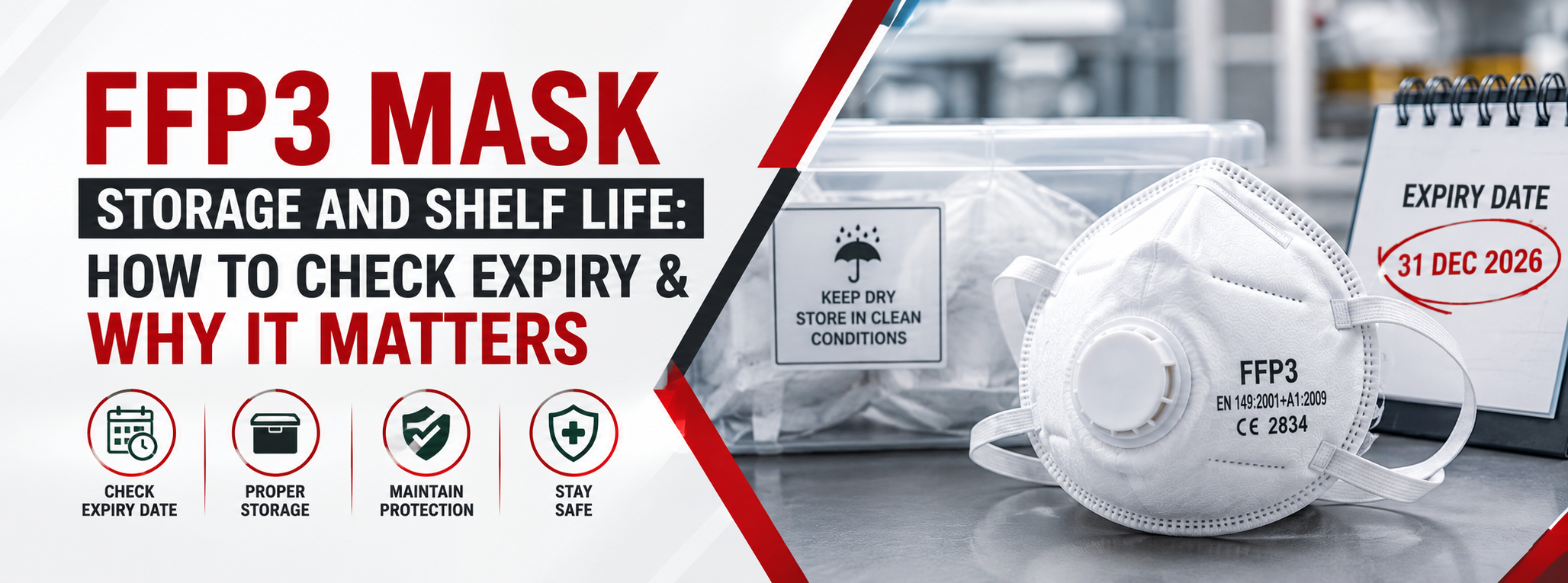
Expiry information will be on the packaging. Look on the bottom or side of the box. Four small icons will have the information you need to know.
- Hourglass icon: sits next to the use-by date, shown as MM/YYYY
- Thermometer icon: shows the safe storage temperature range
- Umbrella icon: shows the maximum humidity limit
- Factory icon: indicates the manufacturing date on some brands
Mark the expiry on the outer carton when stock arrives. That saves your time from digging through boxes in the future.
Disposable vs Reusable FFP3 Masks: Shelf Life Compared
The two formats age very differently, and this also affects how much stock you should hold. Here’s a quick comparison:
| Type | Typical Shelf Life | Once Opened | Best For |
|---|---|---|---|
| Disposable FFP3 | 3 to 5 years sealed | One shift, then discard | Occasional or varied tasks |
| Reusable half mask body | 5 to 10 years | Years with cleaning | Daily site work |
| P3 filter cartridge | 5 years sealed | 1 to 3 months in use | Regular dust exposure |
Which Option Suits Your Type of Work
Occasional dust exposure suits disposables. No cleaning, no storage routine, no filter tracking.
Daily exposure suits a reusable half-face mask with P3 filters. The silicone body lasts years. Only the filters need replacing.
A half mask also holds its seal better over a long shift. Foam-edged disposables cannot match that.
Fit Testing and Legal Responsibility for In-Date PPE
Under COSHH, employers must provide RPE that is suitable and in efficient working order. Expired stock fails that test.
An FFP3 mask fit test is also required for every worker, on every mask model. Fit testing an expired mask proves nothing useful.
Keep a face fit testing kit on site if you test in-house. Record the date, the model and the result for each worker.
How to Store FFP3 Masks Correctly
Good storage is simple. It just needs to be consistent across every location where masks are kept. Work through the checklist below, then check the mistakes that follow it.
Storage Dos and Don'ts Checklist
- Store below 30C and under 80% relative humidity
- Keep masks in original sealed packaging until use
- Use a cool, dry cupboard away from windows
- Rotate stock so older boxes get used first
- Mark arrival and expiry dates on outer cartons
These four habits cause more expired stock than anything else on UK sites:
- Leaving boxes in a van through summer heat
- Storing near solvents, fuel or cleaning chemicals
- Crushing masks in toolboxes or rucksacks
- Keeping stock in damp basements or drying rooms
Storing Bulk Stock vs Individual Opened Boxes
Bulk stock belongs in a dedicated PPE cupboard. Keep cartons sealed and off the floor.
Opened boxes need different handling. Reseal them after each use. A lidded plastic box suits a protective mask supply in a site hut.
What Happens to Filtration Performance After Expiry
This surprises most people. Expired masks usually fail on fit, not filtration.
Straps lose their stretch first. Nose foam hardens or crumbles. Adhesives weaken. The mask stops sealing properly, so unfiltered air bypasses the filter entirely.
Filtration does decline too, as the electrostatic charge decays. But seal failure causes the bigger, faster problem.
Browse in-date FFP3 masks and fit test kits at Respirator Shop. Every box carries clear expiry dating.
Conclusion
An FFP3 mask is only protective while it is in date and correctly stored. Check expiry dates when stock arrives. Keep masks cool, dry and uncrushed. Rotate older boxes first.
Expired PPE is a compliance failure and a genuine safety risk. A five-minute stock check every few months prevents both.
Time to refresh your stock? Respirator Shop supplies in-date FFP3 masks, reusable half masks and fit testing kits. Every box carries clear expiry dating. Order fresh stock, rotate the old out, and keep your team audit-ready.
FAQs
Can you use an expired FFP3 mask?
No. The mask should be thrown away once it expires on the paper. Straps and foam deteriorate first; therefore, even if the filter is still in good condition, the seal is not.
How long do FFP3 masks last unopened?
Normally three to five years from production. Sometimes particulate filters last for ten years. This requires storage at less than 30C and under 80% humidity.
How do I know if my FFP3 mask has expired?
Look for an hourglass symbol with a best-before date. It is normally found at the bottom or sides of the box. Icons for temperature and humidity will be found close by.
Do reusable FFP3 masks expire the same way as disposable ones?
No, not really. The mask frame will last for many years with regular cleaning and checking. However, the filters themselves have a limited lifetime as well.