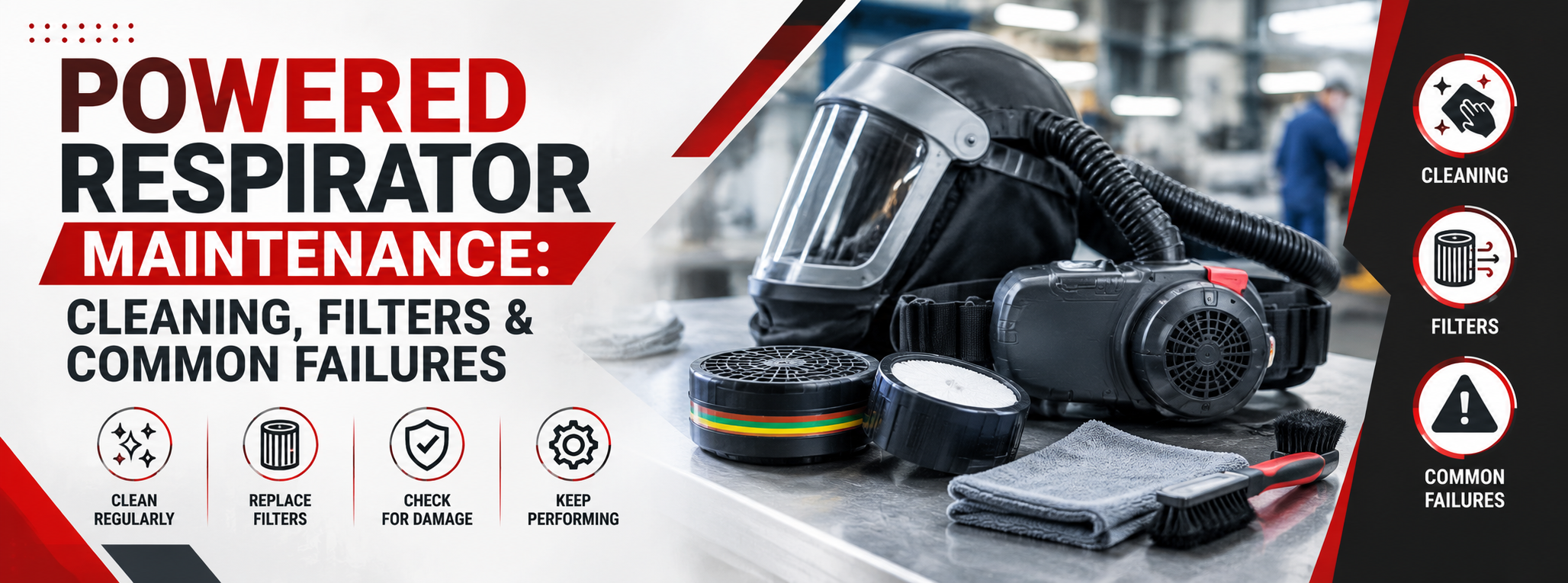
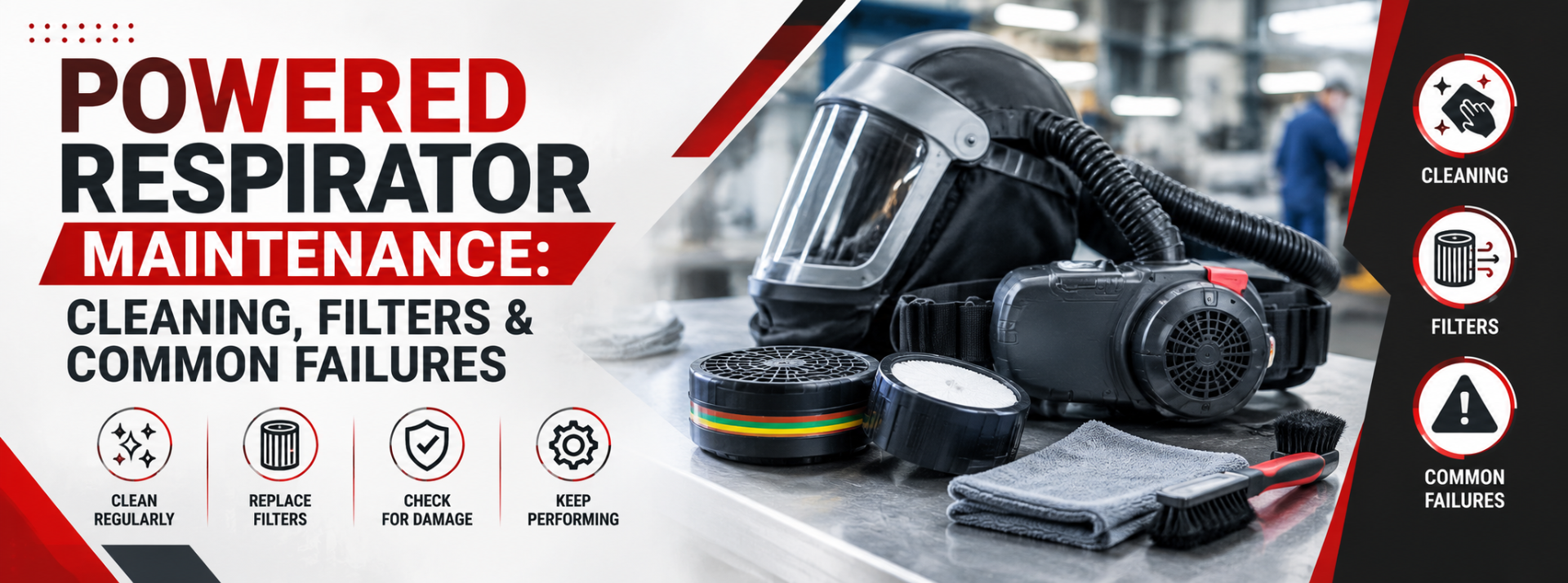
Does your powered respirator mask still deliver the airflow it did when new? Most workers assume yes. The unit switches on, the fan hums, and that feels like proof enough. It is not. Filters load gradually over weeks of dust exposure. Batteries lose capacity with every charge cycle. Seals perish quietly out of sight inside the hose connectors. None of these failures announces themselves clearly, and the wearer rarely notices the drop. Under COSHH, employers must keep RPE in efficient working order and maintain inspection records for five years. This guide covers the daily cleaning routine, filter intervals and battery care. Each one keeps a unit compliant and genuinely protective. Common failure signs are covered too, so problems get caught early. A full daily, weekly and monthly checklist follows.
Why Regular Maintenance Matters for Powered Respirators
Maintenance is not optional housekeeping. It is what keeps the stated protection factor real.
How a Powered Air Respirator Protects You
A battery driven fan pulls air through a filter. Clean air then flows into a hood, visor or facepiece.
That airflow creates positive pressure inside the headtop. Contaminated air struggles to get in, even without a tight face seal.
Consequences of Poor Maintenance on Filtration and Airflow
A loaded filter forces the motor to work harder. Airflow drops below the minimum required under EN 12941.
Once positive pressure fails, the hood offers little more than a dust cover. Workers rarely notice the change until protection has already gone.
Manufacturer and Workplace Compliance Requirements
COSHH requires RPE to be examined and tested at suitable intervals. For powered units, monthly documented checks are the accepted standard.
Keep records for at least five years. Inspectors will ask for them.
Daily and Post-Use Cleaning Routine for Powered Respirator Hoods and Masks
Cleaning takes a few minutes and prevents most common problems before they start. Follow these five steps at the end of every shift.
- Disconnect the blower unit and remove the filter before cleaning
- Wipe the powered respirator hood inside and out with mild detergent
- Clean the visor with a lint free cloth and approved lens solution
- Wipe the blower casing and inlet grille, never spray it directly
- Air dry all parts fully before reassembly or storage
Never submerge the blower unit. Water in the motor housing ends the unit's working life immediately.
Filter Care for Powered Air Respirator Systems
Filters are the single biggest factor in airflow performance. Get the replacement rhythm right and most other problems disappear.
How Often to Check and Replace Filters
Check filter conditions before every shift. Replace at the manufacturer's interval, typically one to three months.
Heavy dust environments burn through respirator filters far faster. Track actual usage rather than relying on the calendar alone.
Signs a Filter Needs Changing
- Airflow drop: the indicator shows reduced output during the pre use check
- Odour breakthrough: any smell inside the hood means the filter has failed
- Increased resistance: the motor sounds like it is straining
- Visible loading: heavy dust build up on the filter surface
Storing Spare Filters Correctly
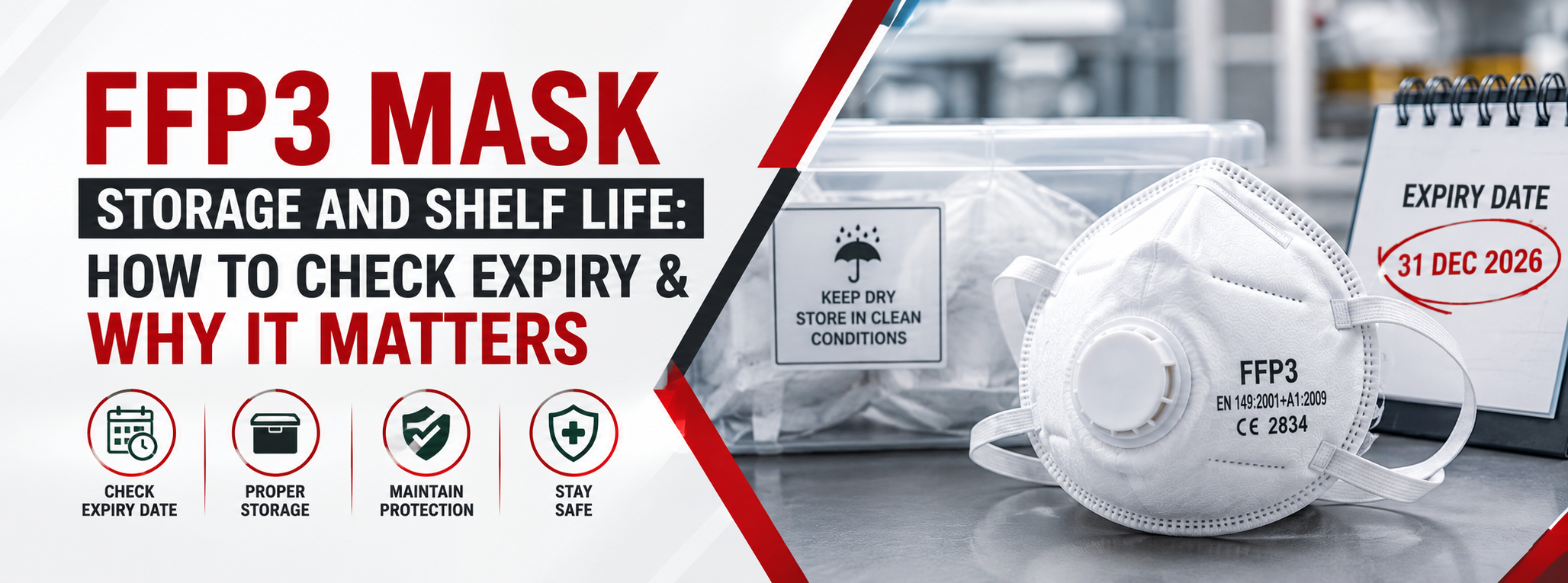
Spare filters need the same care as the ones in use. Keep them sealed in original packaging until needed. Store below 30C in a dry cupboard.
Filters carry their own expiry date. Rotate stock so older units get used first.
Battery Care for Battery Powered Air Fed Masks
Batteries degrade with every charge cycle. Most deliver 8 to 12 hours when new. Five simple habits extend that working life considerably.
- Charge fully overnight rather than topping up repeatedly
- Avoid leaving batteries flat for long periods
- Store at room temperature, never in a cold van overnight
- Replace when run time falls below four hours
- Expect two to five years of service from a typical pack
Common Failures in Powered Respirators and How to Prevent Them
Six failures account for most breakdowns on site. Learn the warning sign for each one. That means catching problems before a shift starts.
| Failure | Warning Sign | Fix |
|---|---|---|
| Clogged filter | Airflow alarm or weak flow | Replace filter |
| Blower motor wear | Unusual noise, low output | Service or replace unit |
| Cracked hose | Smell of contaminants | Replace hose, never tape |
| Perished seal | Air escaping at connectors | Replace seal kit |
| Visor fogging | Reduced visibility | Clean with approved solution |
| Battery fade | Run time under 4 hours | Fit a new battery |
Reduced Airflow or Blower Motor Failure
Check the filter first, then the inlet grille. Both block easily in dusty conditions.
If airflow stays low after both are clear, the motor is wearing out. That usually means a service or replacement.
Hose, Seal or Connector Damage in Air Fed Respirator Systems
Run your fingers along the full hose length weekly. Feel for cracks, soft spots and ridges.
An air fed respirator hose must never be repaired with tape. Replace the whole hose instead.
Fogging, Poor Visibility or Visor Damage
Fogging usually signals reduced airflow rather than a visor fault. Check the filter before blaming the lens.
Scratched visors create a genuine safety hazard. Replace the visor insert rather than working around it.
Alarm Faults and Low Flow Warnings
Never silence or ignore a low flow alarm. It exists because the wearer cannot feel airflow loss reliably.
If the alarm sounds, leave the hazardous area. Then diagnose the cause before returning to work.
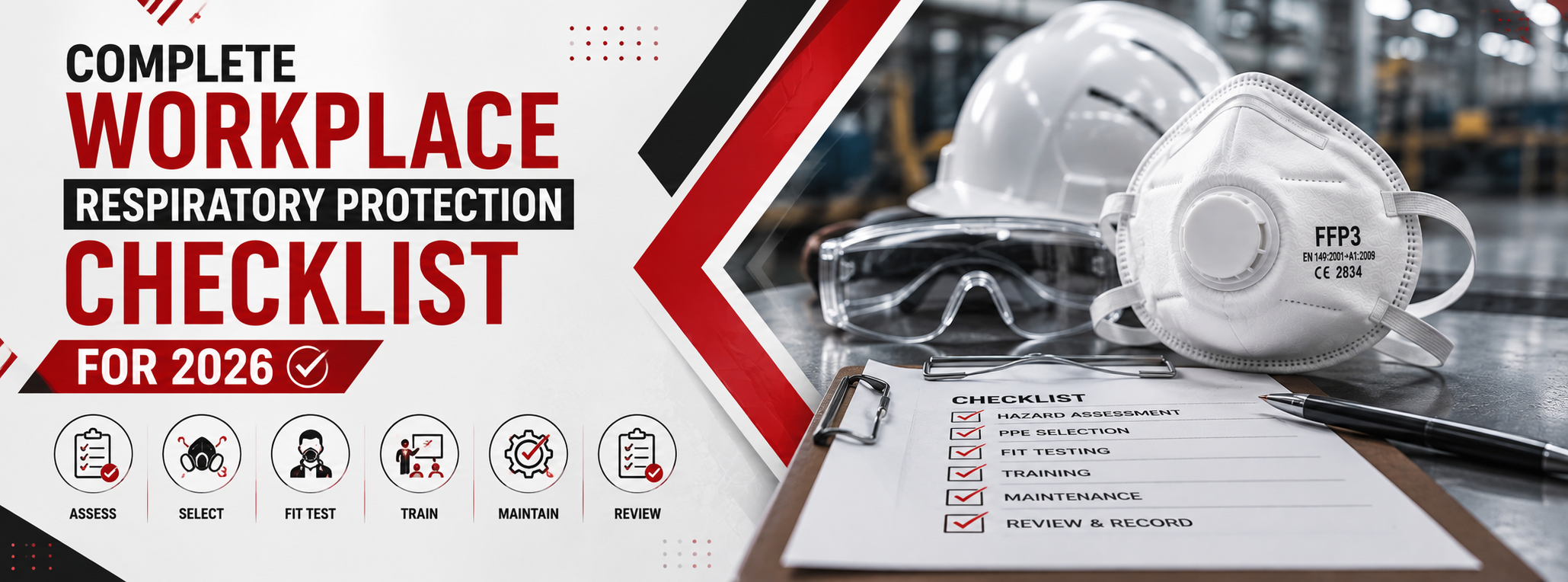
Powered Respirator Maintenance Checklist
Pulling it all together, this schedule covers everything a compliant routine needs. Print it and keep it with the unit.
| Frequency | Task |
|---|---|
| Daily | Airflow test before use |
| Daily | Visual check of hose, seals and visor |
| Daily | Battery charge level confirmed |
| Daily | Wipe down hood and visor after shift |
| Weekly | Deep clean headtop and inspect straps |
| Weekly | Check filter loading and airflow trend |
| Monthly | Full seal and connector inspection |
| Monthly | Battery run time test against spec |
| Monthly | Update maintenance log for compliance |
When to Repair vs Replace Your Powered Respirator
Consumable parts are worth replacing. Core components often are not.
Cost of Repairs vs Full Unit Replacement
Filters, hoses, visors and batteries are inexpensive and quick to swap. Replace these without hesitation.
A failed blower motor is different. Repair costs often approach half the price of a new unit. At that point, replacement usually makes better sense.
Manufacturer Warranty and Servicing Support
Most units carry a one to two year warranty on the blower and battery. Check coverage before paying for repairs.
Some manufacturers offer annual servicing contracts. For fleets of ten units or more, these typically work out cheaper than reactive repairs.
Browse powered respirators, hoods and filters at Respirator Shop. Consumables cover common UK systems.
Conclusion
A powered respirator protects properly only while it is maintained properly. Clean it after every shift. Check airflow before every use. Replace filters and batteries on schedule.
Build the checks into your daily routine and log them. Compliance follows naturally, and so does genuine protection.
Need replacement parts to keep yours running? Respirator Shop stocks powered respirators, hoods, filters and batteries for common UK systems. Keep spares on the shelf so a loaded filter never costs you a shift. Order what you need with fast UK delivery.
Frequently Asked Questions
1. How often should you clean a powered respirator mask?
After every shift. Wipe the hood, visor and blower casing, then air dry fully. A deeper clean of the headtop should happen weekly.
2. How long do filters last in an air fed respirator?
Typically one to three months, depending on dust levels. Replace sooner if airflow drops, resistance increases or any odour reaches the hood.
3. Can you wash a powered respirator hood?
Yes, hoods can usually be wiped with mild detergent and water. Never submerge the blower unit itself, and always check the manufacturer instructions first.
4. Why is my powered air respirator losing airflow?
A clogged filter is the most common cause. Check the inlet grille next. If both are clear, the blower motor is likely wearing out.
5. How long does a battery-powered air-fed mask battery last?
Usually 8 to 12 hours per charge when new. Overall pack life runs two to five years. Replace when runtime drops below four hours.