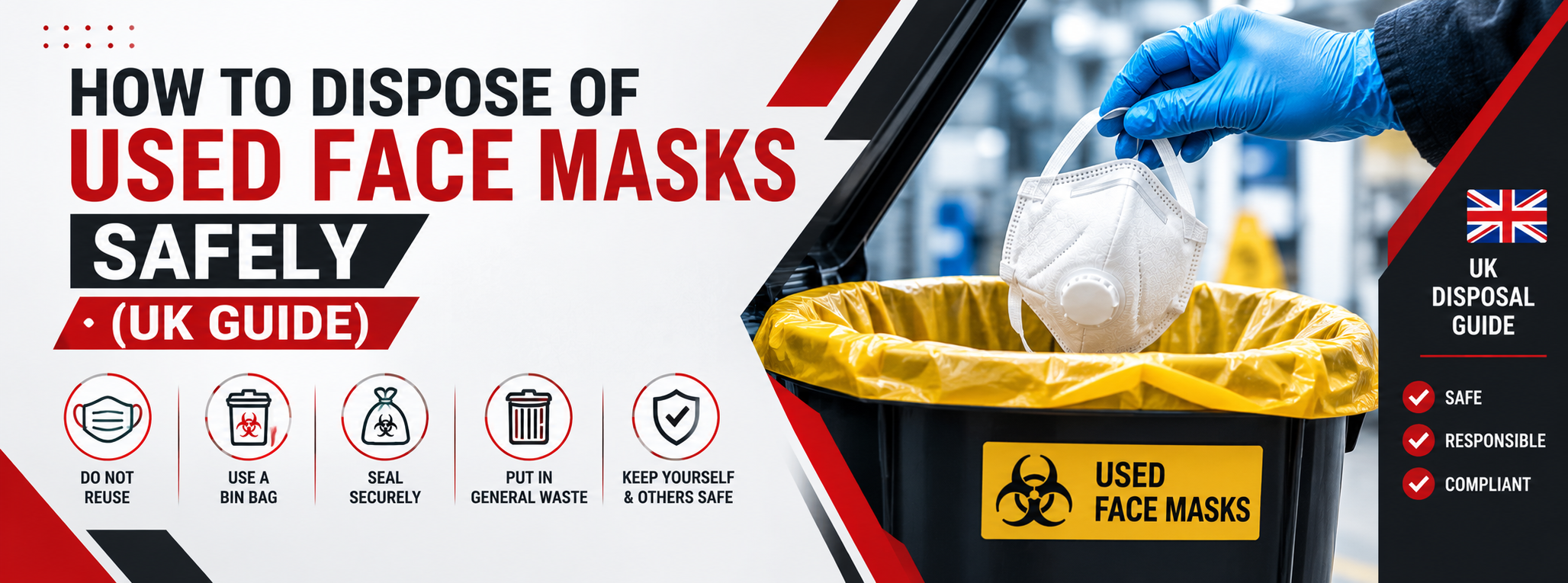
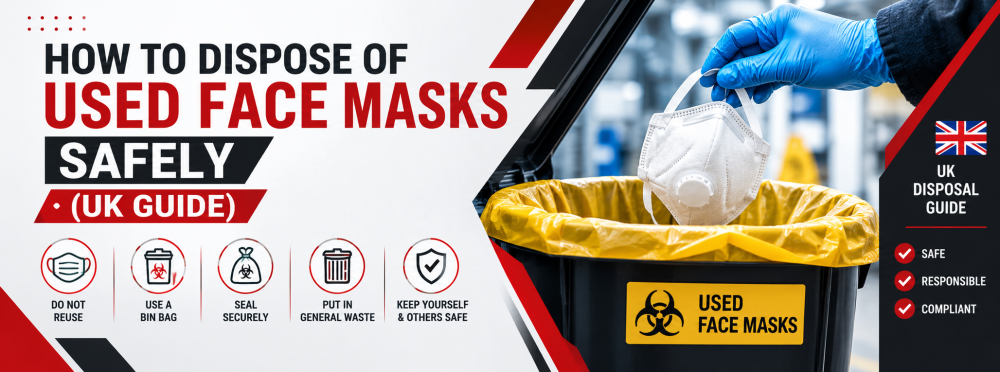
Disposing of a used mask looks simple, yet mistakes are common. A disposable face mask goes in your black bin once it is bagged and sealed. A used FFP3 mask from a dusty job follows the same route. Filters from reusable masks need more thought. Anything exposed to asbestos or chemicals needs a different route entirely, as agreed by UK councils.
Used PPE cannot go in your recycling. The Marine Conservation Society also found PPE litter on 32% of UK beaches in 2021.
Surgical masks, FFP3 mask and reusable respirators each need slightly different handling. You will also learn how filters, fit tests and employer duties fit in. Keep scrolling to learn exactly what to do with yours.
Can You Recycle Used Face Masks in the UK?
No. Used face mask waste stays out of household recycling. Councils such as Cheshire East list masks under general waste. Lab analysis found medical face masks are polypropylene plastic. Masks can also snag sorting machinery and put staff at risk.
Specialist schemes exist to solve such issues. TerraCycle sells a paid Zero Waste Box for disposable masks. It takes non-woven dust masks, FFP2, FFP3, and surgical styles. It refuses medical waste, fabric masks, and paper masks. The company targets shops, offices, and industrial sites.
Reusable gear is different. A reusable face protective mask, such as a half mask, is not single-use waste. You clean it and swap the filters.
Which Bin Do Used Masks Go In? Quick Guide
Bin colors differ from one local council to another, so make sure you know your council’s bin colors. Some common scenarios are:
| Type | Use | Where it Goes | How to Handle |
|---|---|---|---|
| Surgical mask | Daily wear, clinic visits | General waste | Knot it inside a bag |
| Disposable FFP3 or FFP2 | Dust, DIY and trades | General waste | Keep dust inside the bag |
| Basic dust mask | Sanding and light DIY | General waste | Bin it with the dusty waste |
| Mask used near asbestos | Asbestos tasks | Asbestos waste route | Double bag, add warning label |
| Mask used with paint spray or chemicals | Spraying, solvent work | Ask your council or carrier | Read the safety data sheet |
| Used filters | Reusable half masks | General or hazardous waste | Match the substance they caught |
| Reusable mask body | Half face masks | Keep it | Wash it, replace if cracked |
If your mask is not listed, treat it depending on what it picked up, and consult your waste transporter.
How to Dispose of Disposable Face Masks Safely at Home
Safe disposal at home takes three habits: remove carefully, bag it, wash up.
How to Take a Used Mask Off
The outside of the mask holds dust and germs, so touch only the straps. Follow these steps:
- Step 1: Clean your hands before touching the mask
- Step 2: Pinch both ear loops, keeping your fingers off the mask face
- Step 3: Ease it forward, away from your nose and chin
- Step 4: Fold it in half with the outer side tucked inside
- Step 5: Seal it inside a bag and knot the top
- Step 6: Drop the bag into your black bin
- Step 7: Scrub your hands for 20 seconds
Avoid these slips:
- Flushing a mask, which blocks drains and sewers.
- Leaving a used mask on a bench, car park, or train seat.
- Reusing a single-use mask.
What to Do If Someone at Home Is Unwell
When illness hits the household, add one step. Put the mask, tissues, and gloves in a bag. Place that bag inside a second one.
Both bags go in your household bin, as Cheshire East advises (Cheshire East Council). Some councils ask you to hold the bags for 72 hours (Scottish Borders Council). Confirm your own council's rule.
For clinical waste from a carer, ask your GP for disposal advice. Keep the bags out of reach of children and pets until collection day.
How to Dispose of FFP3 Masks and Dust Masks
A used FFP3 mask is ordinary waste after normal use. The filter layer does not make it hazardous. What the mask caught decides how you dispose of it. Like other Disposable Respirators, it is single-use and goes in household rubbish.
Use the same removal steps as above. Never tap a mask clean, because trapped dust escapes into the air.
Disposable Dust Masks for DIY and Building Work
A dust mask from sanding, sawing, or plastering counts as ordinary rubbish.
Tie it into the same bag as your site waste. A business must use an authorised carrier and a waste transfer note.
A wet or sticky mask goes in the same tied bag. Then think about what created the dust. Lead paint, mould, and old insulation can change the rules. If asbestos is possible, stop and get specialist advice.
How to Dispose of Respirators Used With Asbestos, Paint Spray or Chemicals
Some masks catch more than dust. They need stricter handling, and sometimes a specialist carrier.
For asbestos, HSE tells workers to double-bag all waste and never reuse disposable RPE. The employer must dispose of that waste properly. Treat the used respirator as asbestos waste, not rubbish. Do not put it in a household bin. Hazardous waste needs a consignment note for every movement. Keep copies for three years.
For paint spray and chemicals, you usually wear a reusable spray mask. It is a half mask with vapour and particle filters. Those filters can hold solvent or chemical residue after a job. Check the product safety data sheet to see if the waste is hazardous. Seal used filters in a bag and ask your waste carrier what to do. Businesses cannot mix hazardous waste with ordinary waste.
Reusable Half Face Masks and Spray Masks: How to Dispose of Filters
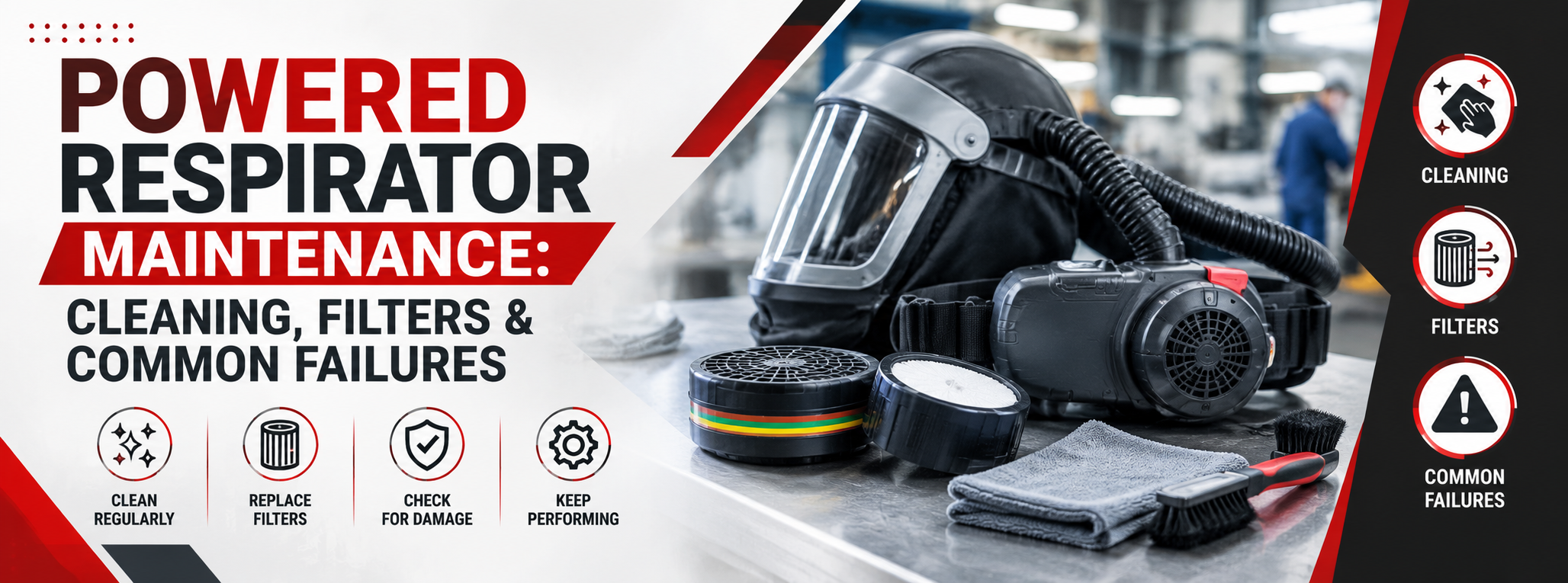
A half-face mask body is a long-term kit. The filters are consumables, so they are the part you replace and dispose of.
When to Replace Filters and Cartridges
Filters clog or expire long before the facepiece wears out. Swap them when:
- Each breath takes more effort.
- You notice a smell or taste inside the mask.
- The filter is cracked, soaked, or visibly clogged.
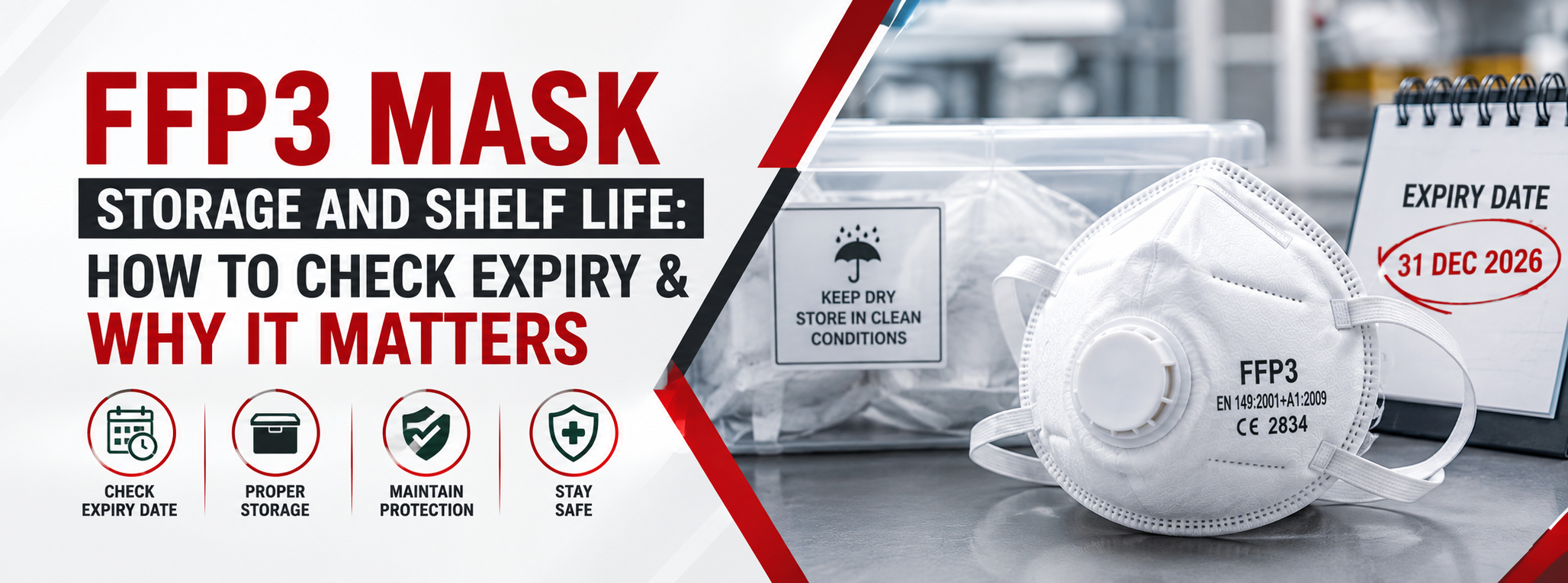
- The maker's expiry date or schedule has passed.
- A dusty or chemical job has loaded the filter.
- Tip: write the fitting date on each new filter to track its life.
Follow the manufacturer's instructions. HSE expects RPE to be kept in good working order (HSE). Bag spent filters before binning. Filters with hazardous residue need specialist handling.
Cleaning and Storing the Mask Body
A clean, dry facepiece seals better and lasts longer. Build these habits into your routine:
- Wipe it with mild soapy water or the maker's wipes.
- Rinse, then dry it fully before storage.
- Check valves, straps, and the sealing edge for wear.
- Store it sealed in a clean bag or box.
- Keep it away from dust, heat, and sunlight.
- Avoid solvents, which can damage the sealing edge.
Replace the body when it cracks, stiffens, or stops sealing.
Refit Test After Changing Mask Type
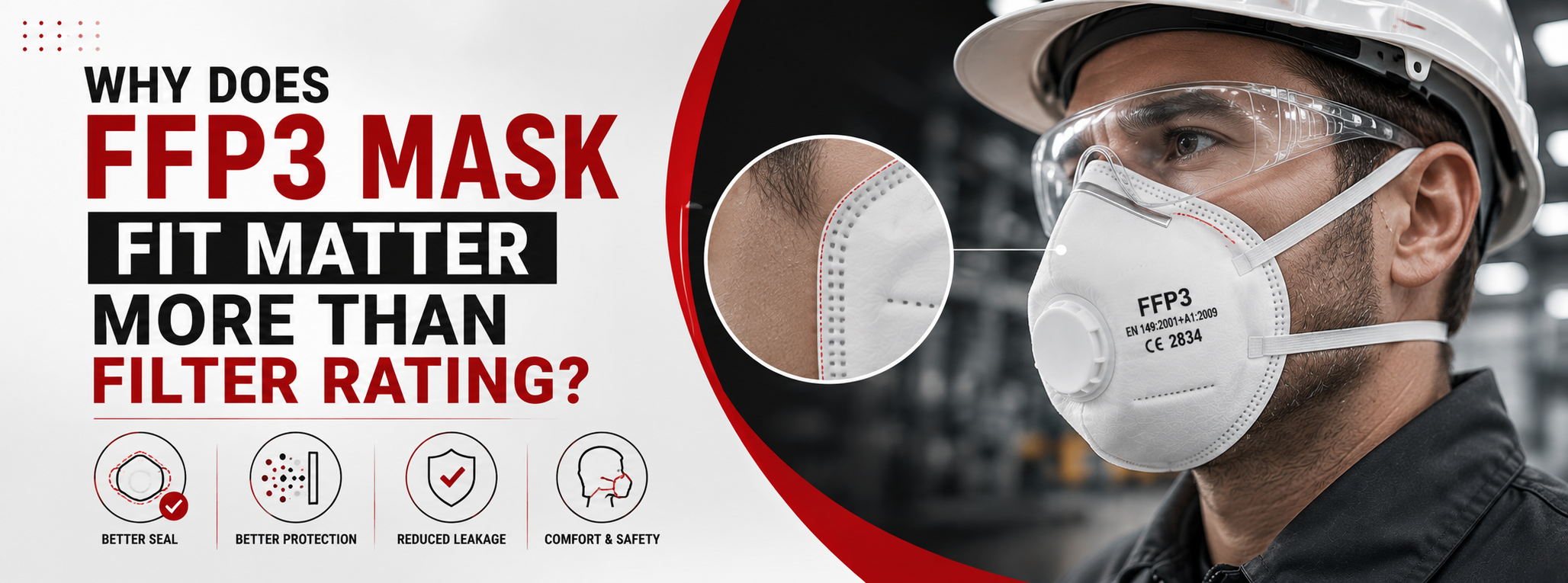
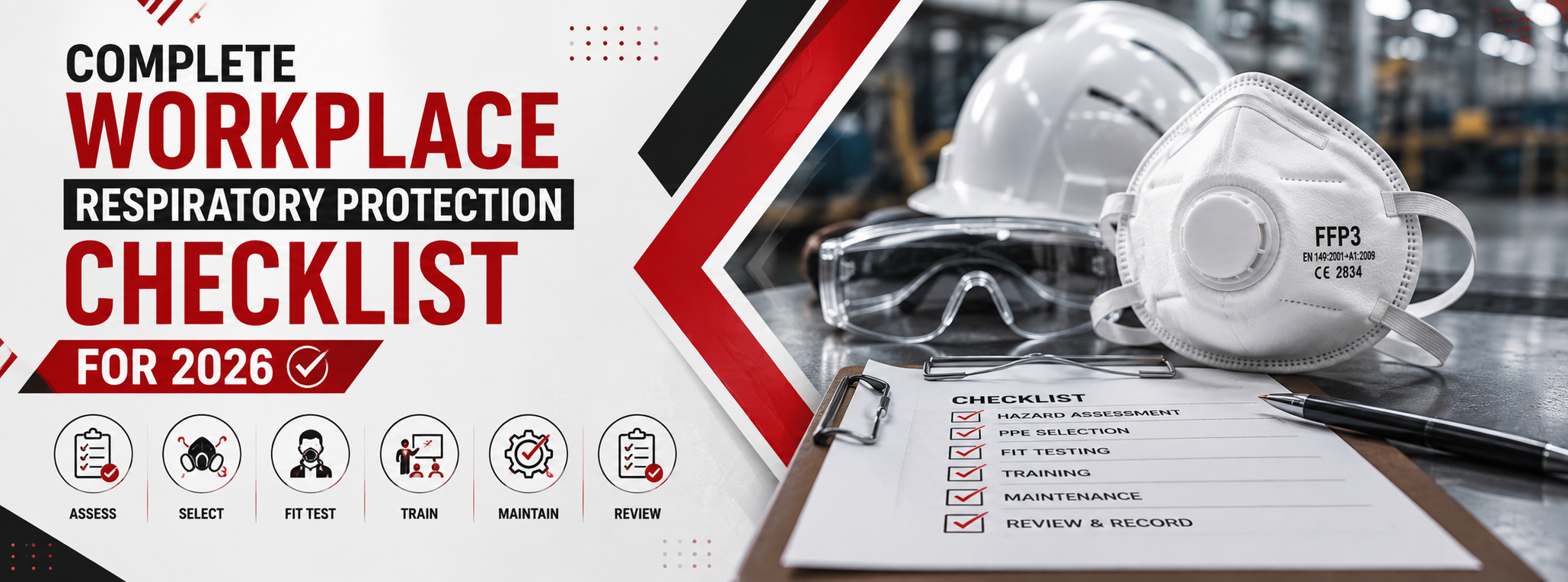
Every make, model, and size fits differently, so a new mask needs a new test. A fit test checks one specific model and size against your face. Moving from an ffp3 mask to a half face mask means testing again. A size change does too. A competent fit tester should run the test. Keep the result on file.
Workplace Rules: Employer Duty of Care for Used PPE
Employers carry the legal duty for waste from their sites. They must store waste safely and classify it correctly. They may hand it only to authorised carriers.
A simple system covers this. Employers should:
- Place covered, labelled bins near exits and work areas.
- Keep hazardous masks and filters apart from general waste.
- Hold spent masks in a closed bin until collection.
- Use waste transfer notes for ordinary waste and consignment notes for hazardous waste.
- Keep notes for two years (non-hazardous) or three years (hazardous).
- Show staff how to remove, bag, and bin masks without spreading dust.
- Provide fit testing for anyone wearing a tight-fitting mask.
- Review the disposal route whenever the task or substance changes.
TerraCycle lists EWC code 15 02 03 for business transfer notes (TerraCycle UK). Contaminated masks should never leave site in a worker's pocket or van. Check bins weekly so mask waste never builds up or spills.
Why You Should Never Litter or Recycle Used Masks
Discarded masks harm wildlife, and they do not belong in the recycling stream either.
The RSPCA rescued over 900 animals from litter after lockdown began. It warned that mask straps can tangle wildlife. In one cleanup survey, 94 per cent of volunteers regularly saw PPE litter nearby.
The same goes for recycling bins, for the machinery reasons covered earlier. Put masks in your household rubbish instead.
Conclusion
Most used masks go in the general waste bin, bagged and sealed. Drains, pavements, and recycling bins are never the answer. Asbestos, paint spray, and chemical work follow hazardous waste routes. Reusable half face masks need fresh filters. A new model needs a new fit test. Employers must set clear rules and keep records.
Need a respirator that suits your task? View the FFP3 face mask range at Respirator Shop
Frequently Asked Questions
1.Can you put face masks in the recycling bin?
No. Kerbside recycling rejects them, so use your household bin instead.
2.Are FFP3 masks hazardous waste?
Not after ordinary use. They turn hazardous when they catch asbestos or other hazardous substances.
3.Should you cut the ear loops before throwing a mask away?
It is optional but helpful. The RSPCA advises snipping straps so wildlife cannot get tangled.
3.Can you recycle face masks at shops or through TerraCycle?
Shop schemes vary, so ask first. TerraCycle's paid Zero Waste Box is the main route for FFP3 and dust masks.
4.How should a business dispose of used respirators?
Bag them and use an authorised carrier with a waste transfer note. Masks contaminated with hazardous substances need a consignment note and hazardous waste handling.