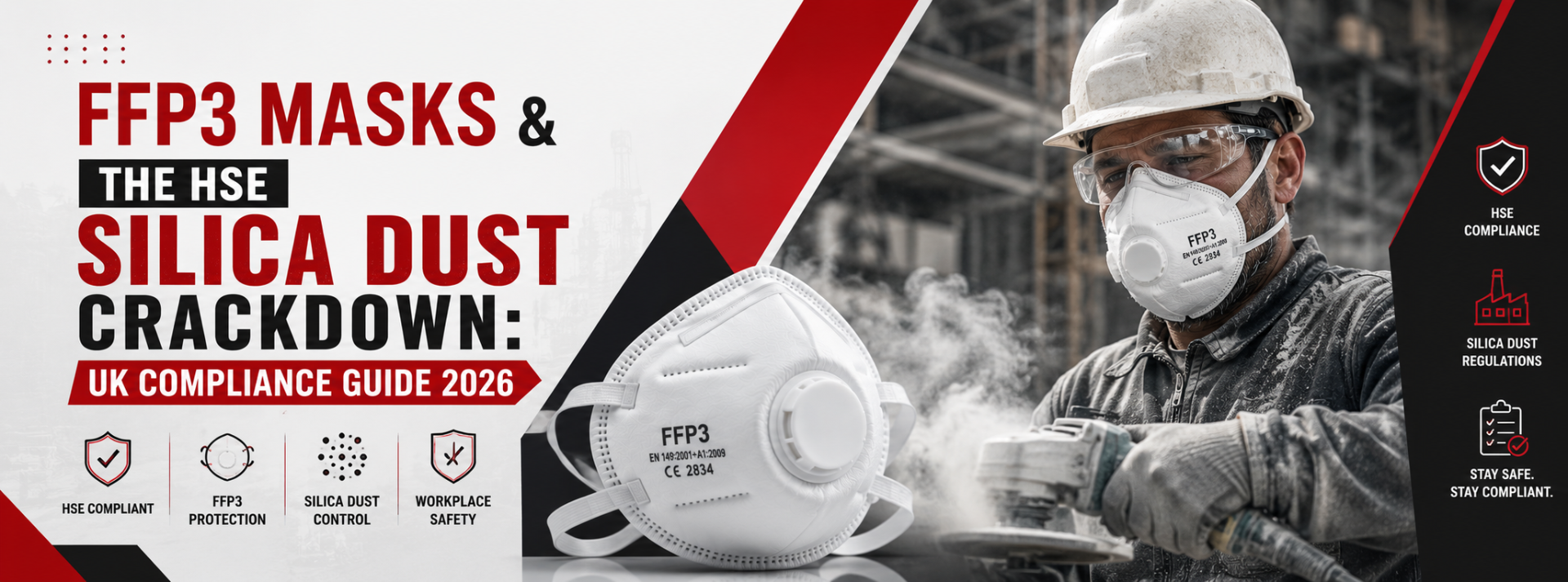
Silica dust is a rising concern which is creating occupational health risks in the UK. Occupations involving cutting and grinding of stones, bricks, and engineered stones expose workers to respirable crystalline silica, which, although invisible to the naked eye, when inhaled, leads to permanent lung damage.
With approximately 600,000 workers get exposed to silica dust every year and around 800 workers dying because of silica-related lung cancer, this problem has gained attention from the Health and Safety Executives (HSE) in the UK. They have intensified their efforts to control silica dust by implementing strategies like targeted inspections, updated guidance, and stricter enforcement under COSHH regulations. This means the employers have to demonstrate the effective dust control measures adopted at workplaces.
That’s where selecting suitable respiratory protective equipment (RPE) has quickly become an integral part of achieving workplace compliance. In many high-risk workplace situations, an FFP3 mask is now a highly recommended level of protection.
This guide walks you through a detailed understanding of what the latest HSE guidance means, a comparison between different dust mask options and the need to strengthen your workplace compliance.
Key Takeaways
- Respirable crystalline silica (RCS) is a hazardous airborne particle that is released during the cutting, grinding, drilling, and polishing of engineered stone, bricks, or concrete.
- Observing the increased silica dust exposure leading to severe illness and fatality, HSE has updated the COSHH guidelines for employers.
- In activities that involve exposure to high-risk silica and other toxic airborne particles, an FFP3 face mask and appropriate respiratory protective equipment (RPE) can provide the highest level of protection.
- Selecting the right dust face mask requires proper face fit testing, correct usage, and maintenance.
What Is Respirable Crystalline Silica (RCS)?
Respirable crystalline silica (RCS) is the microscopic silica dust that is commonly produced when materials containing silica, such as rocks or concrete, are cut, polished, or ground. These particles easily get inhaled and travel deep into the lungs. Prolonged exposure to such crystalline silica without proper respiratory protective equipment (RPE) can result in serious health issues, such as silicosis, lung cancer, and obstructive pulmonary disease (OPD). To prevent respirable crystalline silica from entering the lungs, workers need efficient protection that goes beyond standard dust masks and protective masks.
Industries Most Affected
Apart from heavy industrial settings, workers functioning in everyday construction and manufacturing activities are also exposed to crystalline silica. Here are some of the industries that are most commonly affected by RCS:
- Civil engineering and construction
- Demolition sites and refurbishment projects
- Engineered stone manufacturing
- Brick and concrete cutting
- Ceramic, glass, and foundry sites
- Stonemasonry and monumental masonry
- Infrastructure and road maintenance projects
Since workers on these sites are mostly involved in repetitive cutting, grinding, and polishing activities, using effective dust control measures such as a silica dust mask becomes critical.
Moreover, in industrial areas where engineering controls may not be adequate to minimise the exposure to RCS, employers are advised to provide good-quality FFP3 dust masks or any other RPE depending on the associated risks present on the workplace site.
What Triggered the 2026 HSE Silica Dust Crackdown
HSE estimated that around 12000 lung disease deaths are linked to past exposures at workplaces. Further, the concerning increase in the severe and fatal silicosis among the young UK workers triggered HSE to crack down the silica dust.
Moreover, further research and inspections on the exposed workplace sites identified recurring issues, such as:
- The dry cutting methods for stones released excessive airborne silica.
- Inappropriate selection of dust face masks for high-risk cutting or grounding activities.
- Inadequate dust extraction methods are adopted at the workplaces.
- Insufficient training on the correct usage of respiratory protective equipment (RPE).
To address these issues, the 2026 crackdown of the HSE represented stronger enforcement of the existing duties under the COSHH(Control of Substances Hazardous to Health) guidelines.
HSE's May 2026 COSHH Guidance Sheet Explained
The HSE updated its COSHH guidelines in May 2026, that covers:
- Chemicals such as paints, solvents, fuels, cleaning products, and laboratory reagents.
- Fumes, dust, and vapours like welding fumes, silica dust, wood dust, paint thinners, and metal dust.
- Mists from sprays, emerging nano-scale substances, and gases in industrial use and healthcare.
- Asphyxiating gases, biological agents, and germs.
However, some hazardous substances, such as asbestos, lead, radioactive substances, and substances with flammable and explosive properties that require their own dedicated guidelines, are not covered in COSHH.
The COSHH guidelines are applicable to virtually every workplace in the UK and also assign certain duties to employers, self-employed people, contractors, and visitors. The important eight duties include:
- To assess the risk of hazardous substances used or generated at the workplace.
- To decide what precautions are needed to control, administer, substitute or eliminate the risks.
- To prevent or adequately control the exposure.
- To ensure controls are used, maintained and tested typically every 14 months.
- To monitor exposure, preferably by occupational hygienists.
- To conduct health surveillance by occupational health professionals.
- To provide adequate information, training, and instructions to control the risks and emergencies.
- To plan for emergencies such as accidents, leaks, and spills.
These guidelines clearly highlight that the respiratory protection should complement the engineering controls. Otherwise, even the best FFP3 disposable dust masks may not be able to provide the necessary protection if proper dust control measures are not adopted.
Why Engineered Stone Is Ground Zero
Engineered stone is a major concern for occupational health regulators because of its exceptionally high silica content. Unlike the natural stones that cover varying levels of silica, engineered stone contains upto 95% silica dust.
Activities such as edge polishing, cutting, and finishing of engineered stone can release large amounts of respirable silica particles if effective dust suppression methods are not applied efficiently.
To keep control of this, businesses involved with engineering stones are facing increased scrutiny from the HSE. The health inspectors are paying close attention to ensure that workplaces have proper dust extraction systems, air quality monitoring, wet-working methods, and face fit testing techniques.
FFP3 vs FFP2 vs FFP1 — Which Dust Mask Do You Actually Need?
Different dust masks provide different levels of protection. The FFP respirators are categorised into different types:
- FFP1: Ideal for general non-hazardous airborne particles, these provide 80% filtration of airborne particles.
- FFP2: Best usage in activities across drywalling, sanding, and agriculture dust, the FFP2 mask provides 94% filtration.
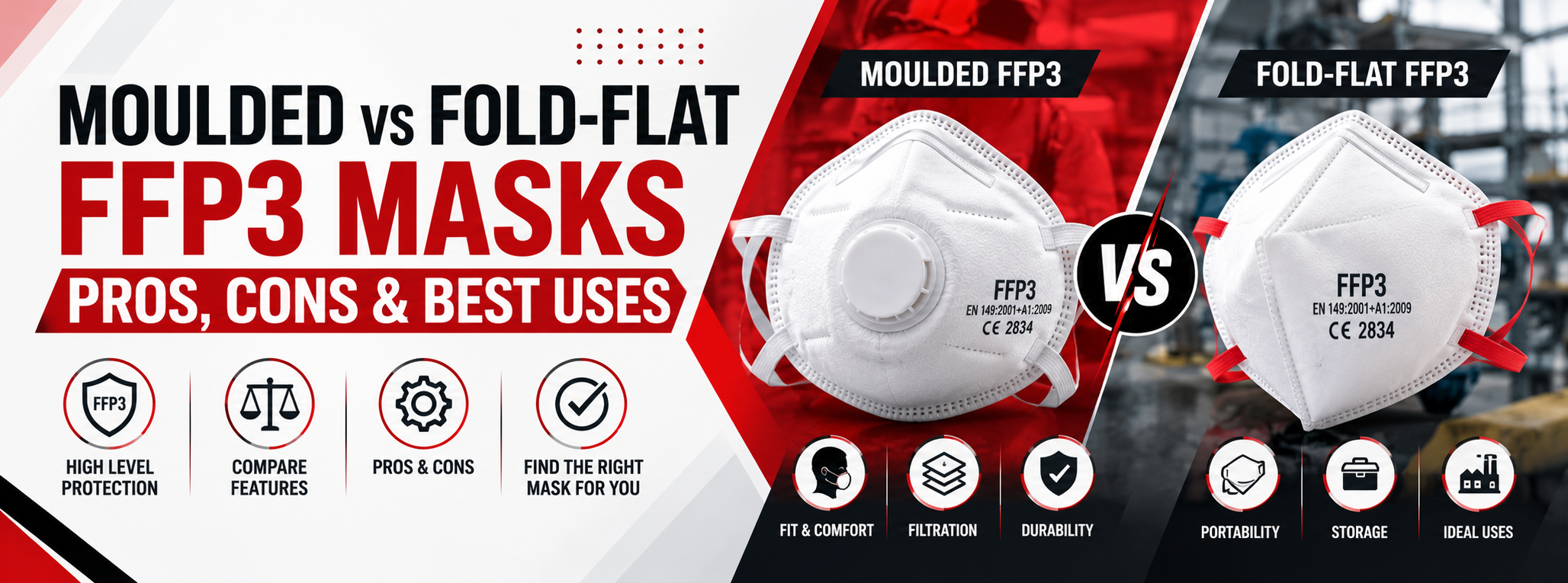
- FFP3: Best for highly toxic airborne particles such as silica, fine dust, and asbestos. Offers a filtration capacity of up to 99% of airborne particles.
To protect against respirable silica dust, an FFP3 mask is generally considered an ideal disposable respirator; here’s why:
- Has a higher Assigned Protection Factor (APF) than FFP1 and FFP2.
- Offers 99% filtration.
- Filters out dust particles that are well under 5 microns in size.
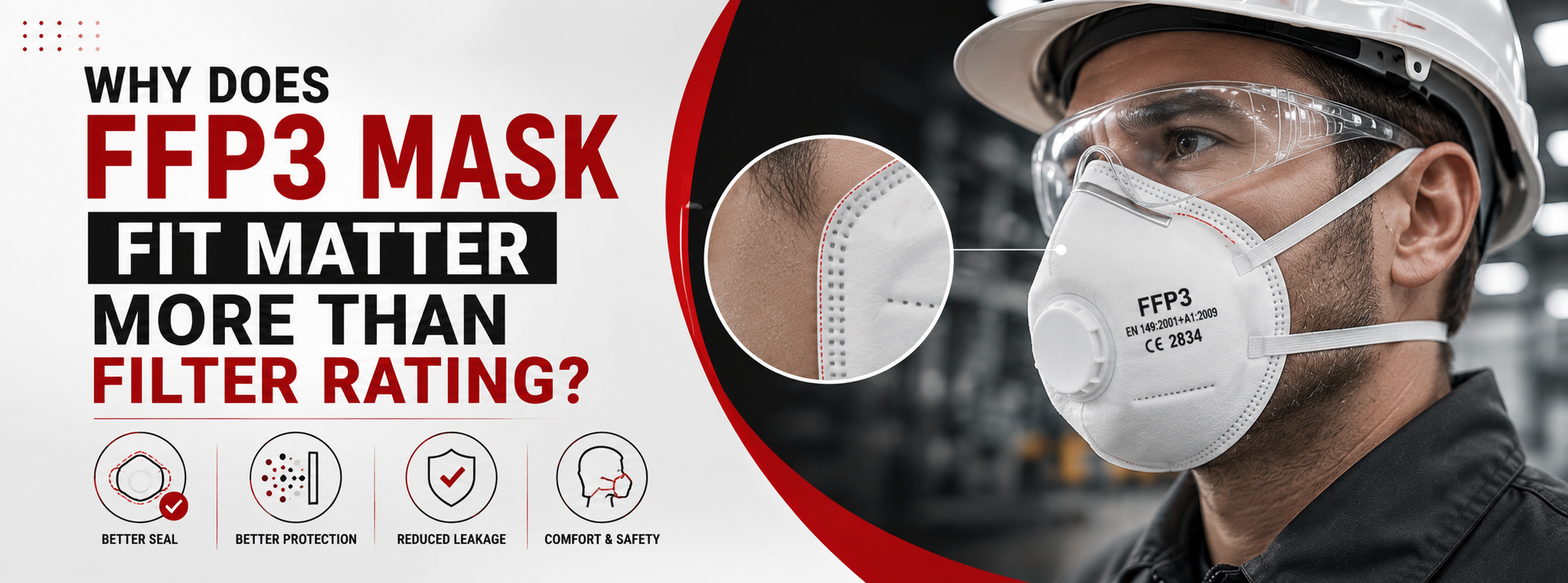
However, employers must understand that supplying an FFP3 face mask is not enough; it must fit the wearer correctly and be compatible with other personal protective equipment (PPE).
Disposable FFP3 vs Reusable/Powered Options
| Feature | FFP3 Disposable Dust Masks | Reusable Half Mask Respirator | Powered Air Respirator (PAPR) |
|---|---|---|---|
| Best for | Everyday tasks that require short-term protection | Consistent daily use | Long-term high-exposure work |
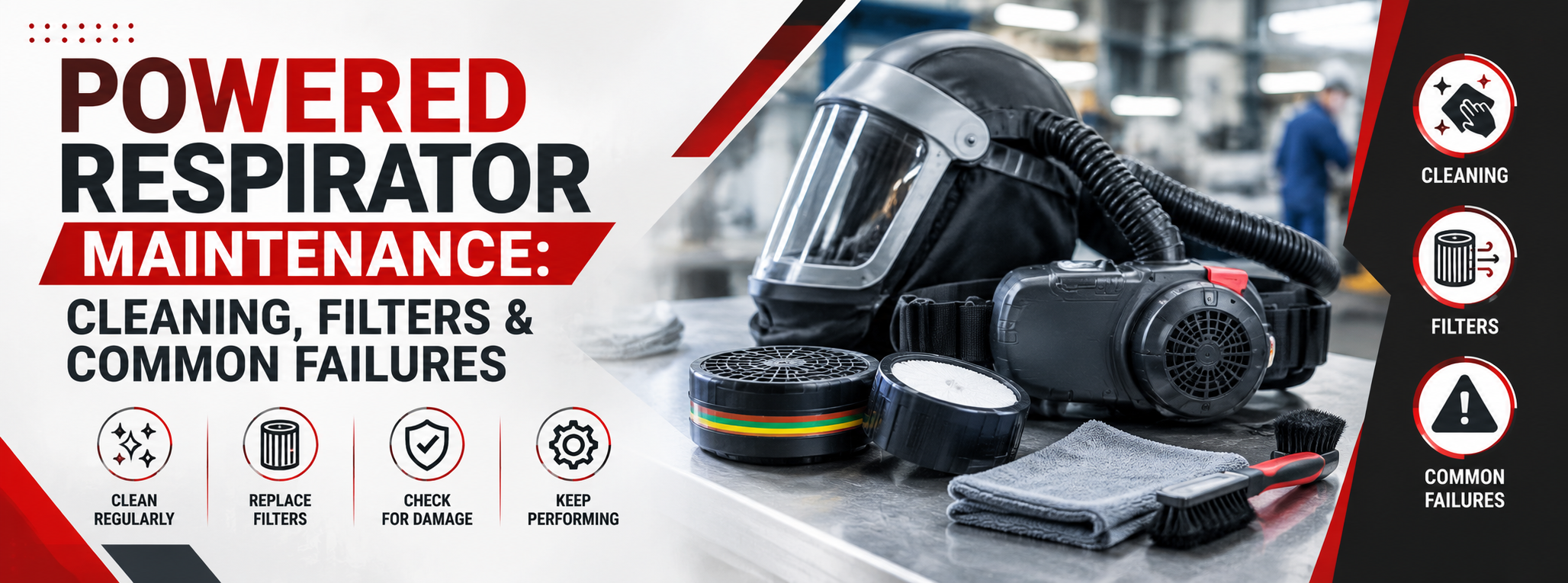
| Maintenance | One-time usage | Filters should be replaced regularly | Filter change and battery maintenance |
| Initial Cost | Lower | Low-to-medium | High |
| Face fit test | Required | Required | Tight-fitted PAPRs require a face fit test, whereas some loose-fitting PAPRs may not require fit testing. |
How to Choose and Fit an FFP3 Mask for Silica Work
Selecting the right protective mask requires more than a filtration rating. Here’s how you can choose an FFP3 mask for silica work. When purchasing an FFP3 mask:
- Ensure that the mask is certified to UK industry standards.
- Choose the correct size and design according to the wearer.
- Make sure to carry out the qualitative and quantitative face fit test before first use.
- A fit check should be performed every time the respirator is worn.
- Discard or replace the wet, damaged or contaminated masks immediately.
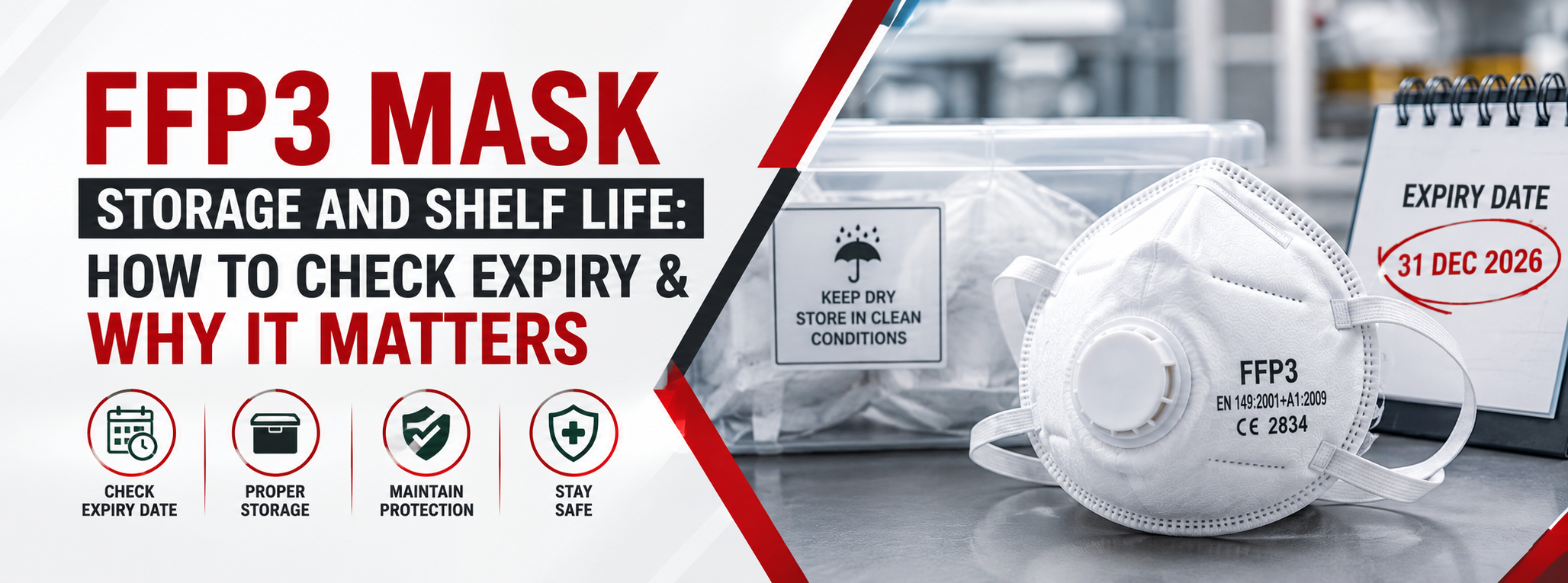
- Always store the unused masks in clean and dry environments.
Moreover, for workers with facial hair, a standard dust mask for beards may not be sufficient in providing the necessary protection. In such cases, loose-fitting PAPRs can be useful.
Conclusion
HSE’s consistent and increased focus on silica dust exposures reflects the importance of implementing effective dust protection measures, controls, and monitoring. By combining suitable respiratory protective equipment (RPE) and the right FFP3 masks, employers can ensure compliance with the COSHH requirements, improve workers and workplace safety, while preparing for the continued HSE inspection throughout the year.
Respirator Shop offers a complete range of FFP3 masks to provide protection against respirable crystalline silica dust and other hazardous airborne particles. Explore the complete range today.
FAQ
What's the difference between a dust mask and an FFP3 mask?
A standard dust mask offers protection against large dust particles, whereas an FFP3 mask filters at least 99% of the airborne particles, including dust and respirable crystalline silica.
Is FFP3 a legal requirement for silica dust under UK law?
According to COSHH regulations, employers are advised to provide the right RPE as per the exposure levels. An FFP3 mask is ideal for high-risk silica dust environments.
How long does an FFP3 mask last before it needs replacing?
FFP3 disposable dust masks are ideal for single-use applications. However, they must be replaced immediately if they get contaminated, create difficulty in breathing, are damaged, or become damp.
Are reusable FFP3 respirators better than disposable ones?
Reusable FFP3 respirators can be a cost-effective option for workers who need efficient protection from silica dust every day. However, they must be cleaned and maintained with filter replacement regularly.
What's the best FFP3 mask for construction/stone work in 2026?
The best FFP3 mask for construction and stone work depends on the type of exposure level, face fit, and comfort requirements. To find the best FFP3 mask, ensure that it is certified to UK standards, fits correctly, and is ideal for the task being performed by the worker.