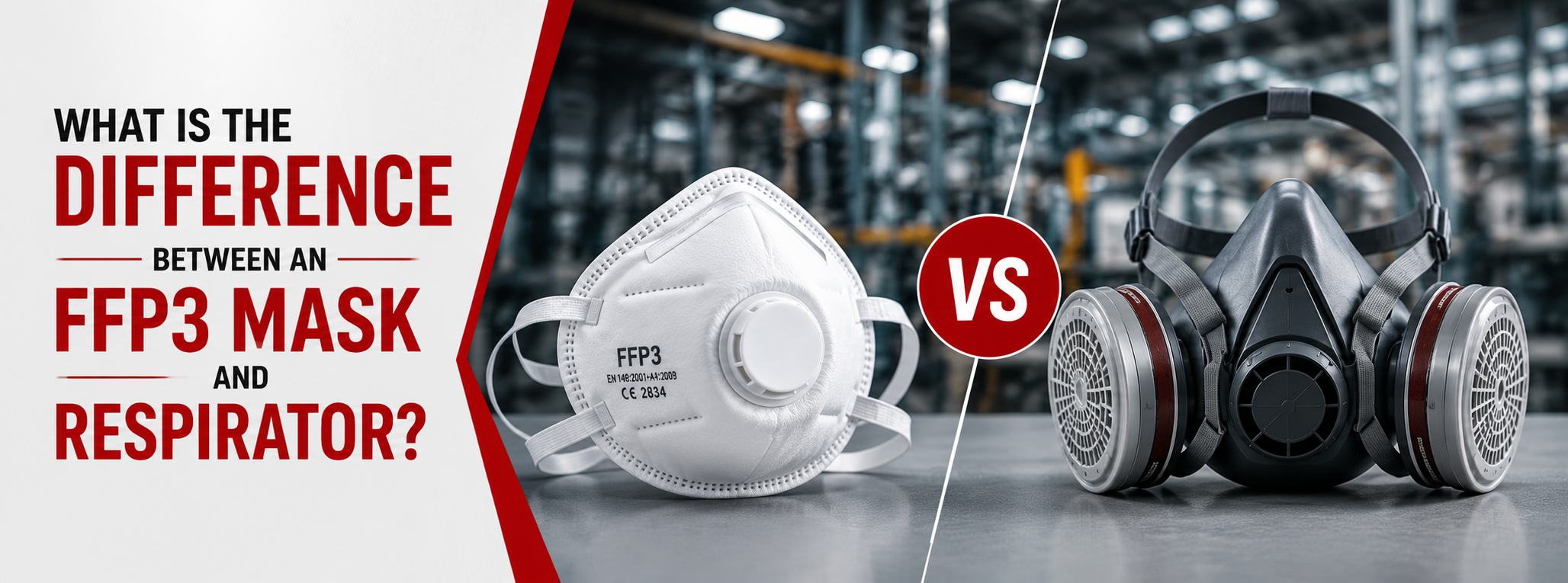
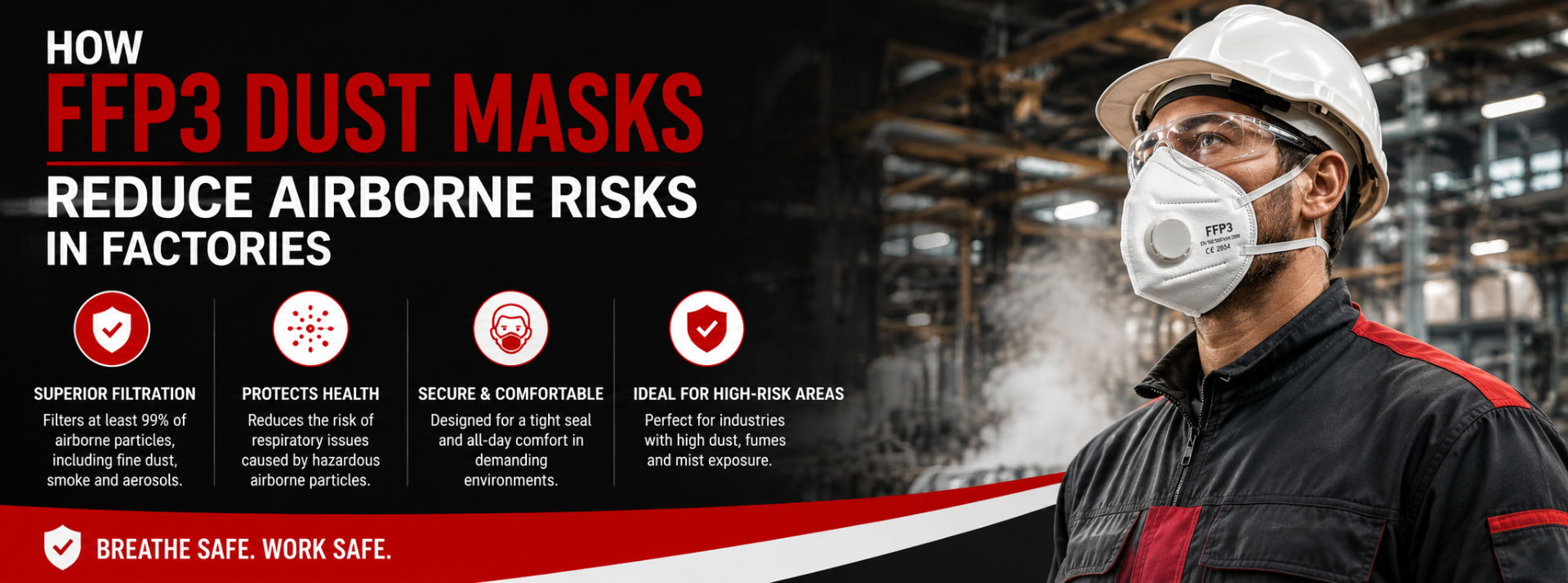
Factory workers are exposed to different types of airborne particles every day. From fine dust, chemical particles, to microscopic contaminants, which are released during cut, grind, welding, sanding, or from chemical mixtures. Workers unknowingly breathe in these minute particles, which over time become firmly embedded in their lungs.
This is where wearing a high-quality protective mask like an FFP3 dust mask becomes essential. Designed with a high level of filtration efficiency, these masks can minimise exposure to hazardous airborne particles that are commonly found during manufacturing, cutting, grinding, or industrial processing.
This blog provides comprehensive details about what an FFP3 mask is, how it reduces airborne risks, and how you can choose the right FFP3 mask according to your factory work type and face.
What Are Airborne Risks in Factory Environments?
The most hazardous dust is frequently the dust that workers hardly notice. Tiny respirable particles can enter the lungs deeply rather than becoming lodged in the nose or throat; some remain in the body permanently and gradually cause scarring, breathing difficulties, COPD, or even cancer years later.
Common Types of Airborne Hazards in Factories
The most common examples of these hazardous interactions include:
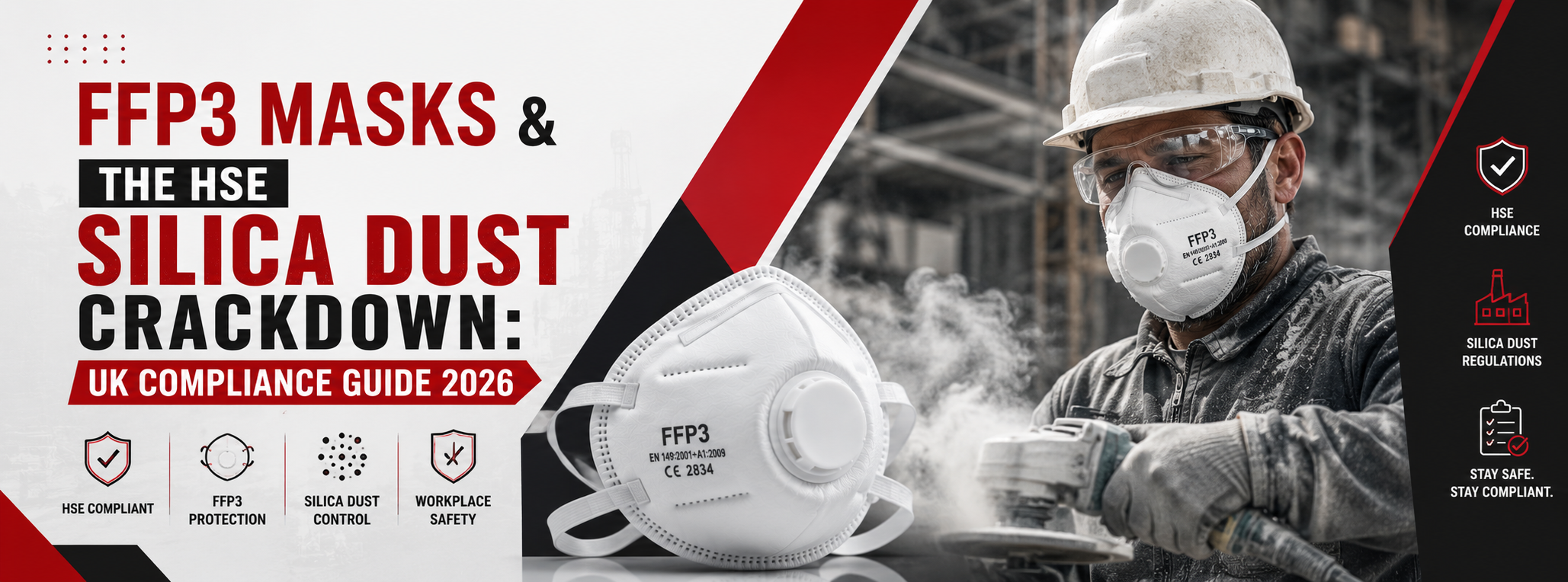
- Silica dust from tiles, stone, and concrete.
- Metal fumes from grinding and welding.
- Chemical fumes from coatings, paints, and solvents.
- Wood dust from sanding and cutting.
- Fibers such as insulation particles or fibreglass.
These contaminants remain suspended in the air for a long time and increase the risk of inhalation.
Why Fine Particles are Dangerous
Fine particles can travel deep into the lungs and can, over time, create health problems like occupational asthma, Silicosis, chronic respiratory irritation, etc. That's why in high-exposure industries or factories such as construction, mining, welding, ceramics, carpentry, and heavy manufacturing, the workers are required to wear a protective dust mask even for a short time.
What Is an FFP3 Dust Mask: An Overview
As a component of personal protective equipment (PPE), FFP3 dust masks need to be certified in compliance with the stringent standard. By filtering out at least 99.95% of air particles, these masks offer the best level of protection. They can provide efficient defence against toxic and dangerous dust, smoke, and aerosols. Additionally, the FFP3 disposable dust masks can withstand up to 30 times the permitted occupational exposure limit.
Still confused about the right mask selection? Let’s compare the best dust masks:
| Mask Type | Filtration Level | Best Used For |
|---|---|---|
| FFP1 | Low protection | Non-toxic dust, basic DIY work |
| FFP2 | Medium protection | Construction dust, moderate industrial use |
| FFP3 | Highest protection | Silica dust, metal fumes, and hazardous factory environments |
How FFP3 Dust Masks Reduce Airborne Risks in Factories
The capacity of FFP3 dust masks to safeguard respiratory health sets them apart from other protective measures. These masks are an essential part of situations full of airborne threats; they are more than just a line of defence.
Long-Term Healthier Lungs
Frequent mask wearing reduces exposure to airborne particles, dust, and fumes that gradually harm the lungs.
Reduced Respiratory Issues
Proper filtration can prevent asthma, silicosis, respiratory irritation, and persistent coughs among the employees.
Prevents Toxic Fine Particles
FFP3 dust masks catch microscopic particles, mist, and fumes before they may enter the respiratory system.
Cleaner Air at Work
Wearing a full or half-face dust mask consistently lowers airborne pollution in high-dust work areas and on manufacturing floors.
Increased Employee Productivity
Healthier employees are more comfortable working in dangerous conditions, have fewer sick days, and experience less fatigue throughout shifts.
Why Standard Dust Masks May Not Offer Enough Protection
To prevent workers from inhaling dust, pollen, and non-toxic particles, dust masks are widely used in diverse industries. When workers are exposed to hazardous substances, standard dust masks can be dangerous.
- Simple dust masks cannot block ultra-fine particles like PM2.5 and PM10.
- Asbestos and silica dust cannot be shielded by dust masks and can permanently harm lungs by settling deep into them.
- Standard dust masks are also ineffective against industrial fumes, solvents, and chemical vapours.
- Workers need approved respirators, not just dust masks, to protect themselves from mould, airborne diseases, poisonous dust, or odours.
Choosing the Best Dust Masks for Industrial Work
Selecting the best dust mask requires analysing several factors like workplace hazards, duration of use, and comfort.
- Better Filtering: Compared to conventional masks, FFP3 disposable dust masks provide better protection against dangerous particles, fumes, and ultra-fine dust.
- Powerful Face Sealing: The entire protection game can be ruined by a small gap around the nose.
- Easy to Breathe: Particularly during extended periods, employees remove uncomfortable masks more quickly.
- Valved vs Non-Valve: Although they may not be appropriate for sterile settings, valve masks feel cooler during strenuous work.
- Workplace-Specific protection: Chemical particles, silica dust, and welding fumes all require varying degrees of protection.
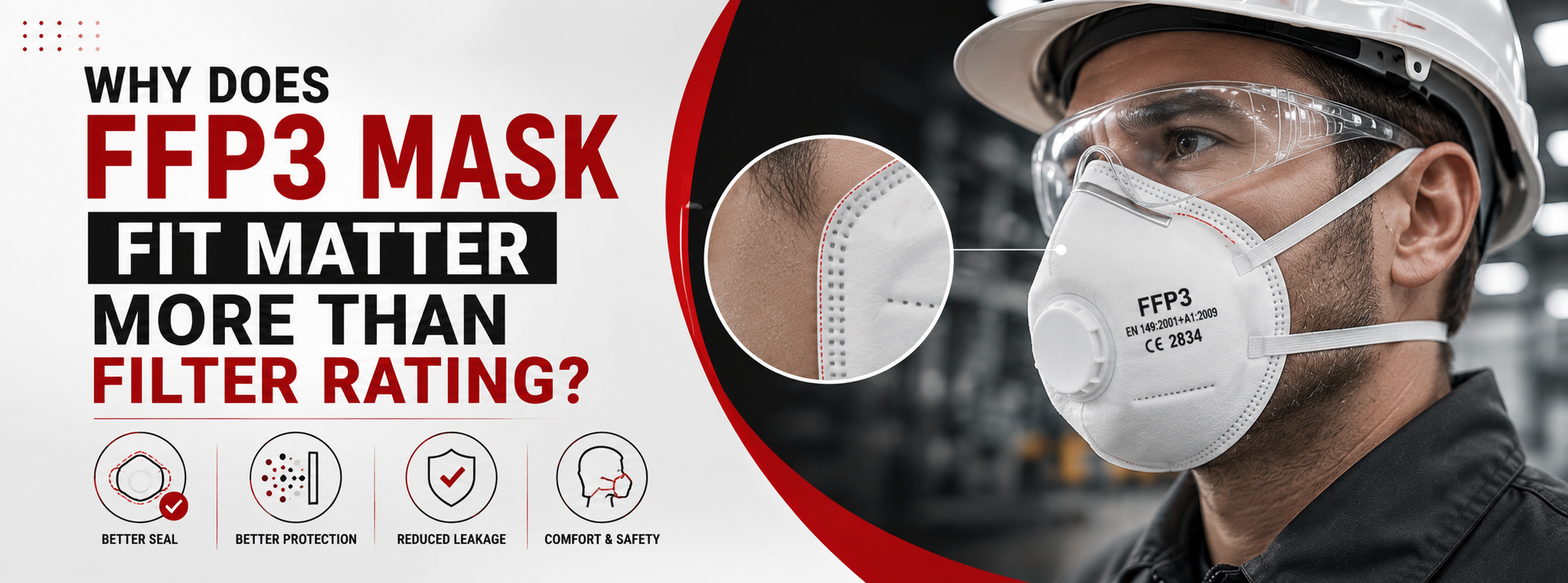
Why Face Fit Testing Matters for Factory Workers
It's critical to make sure you're safe at work, particularly while working in dangerous areas. The use of respiratory protection equipment, such as tight-fitting masks, is a crucial component of safety. Face fit testing is crucial because it guarantees that masks fit correctly and offer the required defence against dangerous materials.
The best dust masks also:
- Prevent unseen dust from seeping through side openings.
- Verify that the mask truly fits the shape of the worker's face. For example, a dust mask for beards should appropriately fit near the beard lines.
- Prevent the illusion of being "protected" when working in high-risk employment.
- Make it easier for employees to breathe without requiring continual modification.
- Vital for welding fumes, chemicals, silica dust, and dangerous industry air.
Note: Remember, the masks you select may not function well if they don't fit properly, putting you at risk.
When Should Factory Workers Replace Their FFP3 Masks?
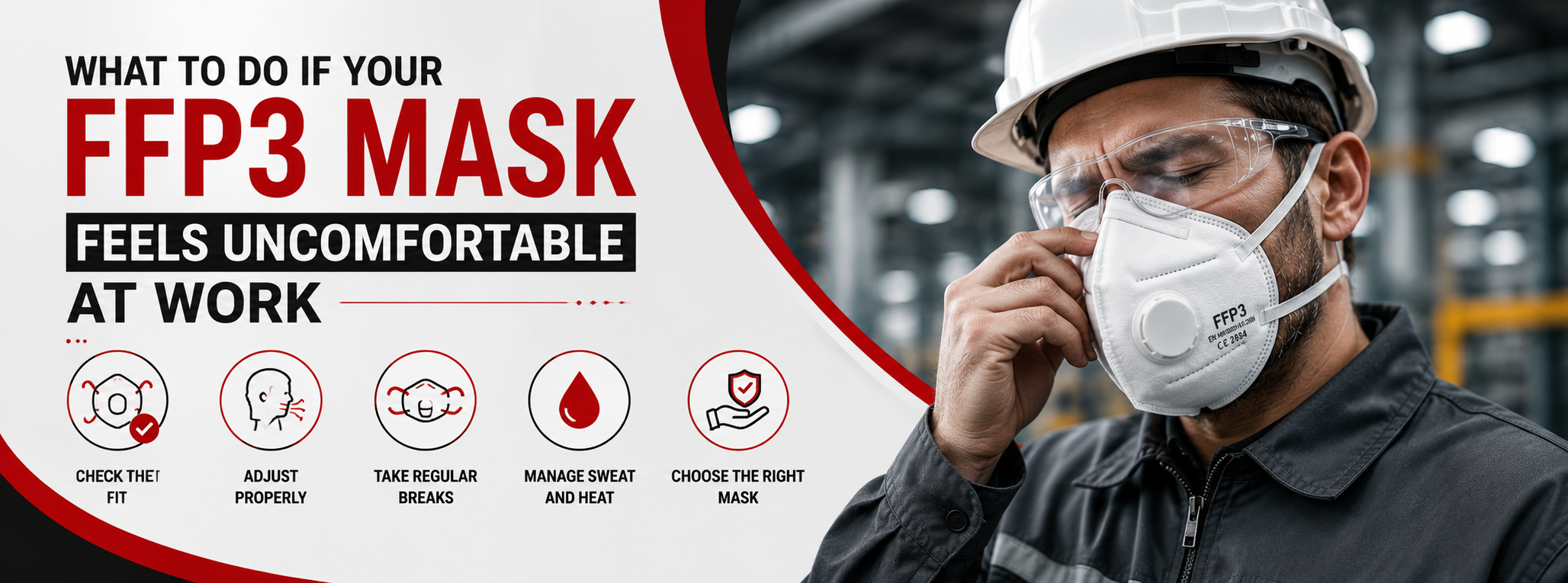
Most workers are unaware of how quickly factory dust degrades mask function. Your FFP3 protective mask is most likely already "off" if it begins to feel that way. Change it when:
- It feels strangely difficult to breathe.
- Sweat creates moisture inside.
- Near edges, grinding dust begins to leak.
- Mid-shift, the straps come loose.
- Welding or chemical odours seep through.
Expert Tips to Improve Respiratory Safety in Factories
To protect workers from the damaging effects of airborne contaminants, every business needs a customised respiratory care program. Workers should adhere to these safety precautions to avoid exposure to silica, asbestos, and other dangerous gases:
- Introduce wet techniques, such as spraying water, to reduce the spread of dust when working on dust-producing chores.
- Always provide employees with NIOSH-certified respirators that fit properly when working in an environment where airborne dangers are present.
- Use a Type CE abrasive-blast provided air respirator when working near silica dust.
- Never reuse disposable masks; always dispose of them properly. Before using reusable masks, make sure they are well cleaned and examined.
- If you think a material contains asbestos, never disrupt it. Wear the appropriate PPE and dispose of asbestos-containing materials according to the correct procedures if you must continue to operate with such materials.
- Avoid eating or drinking in places that are smoky or dusty.
The Bottom Line
FFP3 masks are a powerful defence against hazardous dusts, aerosols, mists, and spores, whether in the chemical industry or in hazardous jobs. They can protect you from radioactive, poisonous, or even cancer-causing particles. So, it is impossible to overestimate the importance of FFP3 masks in protecting respiratory health, whether in medical settings or for daily use.
FAQs
What does an FFP3 dust mask protect against?
An FFP3 protective mask can filter extremely fine particles such as silica dust, metal fumes, hardwood dust, mould spores, certain biohazards, and 99% of the airborne particles.
Are FFP3 masks suitable for factory workers?
Yes, FFP3 masks are especially suitable in industries where workers deal with airborne chemicals, grinding, cutting, handling powder, and insulation. They are intended for high-dust conditions where simple masks lose their effectiveness after a short while.
What is the difference between a P3 dust mask and a regular dust mask?
A P3 dust mask offers high-level of filtration, whereas a regular dust mask is suitable for fine particle environments.
How often should disposable FFP3 dust masks be replaced?
Usually after one shift, but more quickly if the mask becomes damp, dirty inside, or changes shape, or if breathing becomes difficult.
Do factory workers legally need face fit testing?
Yes. A mask's effectiveness depends on how well it seals the face. Contaminated air can enter through even a little opening around the nose or beard area, drastically lowering the level of protection.