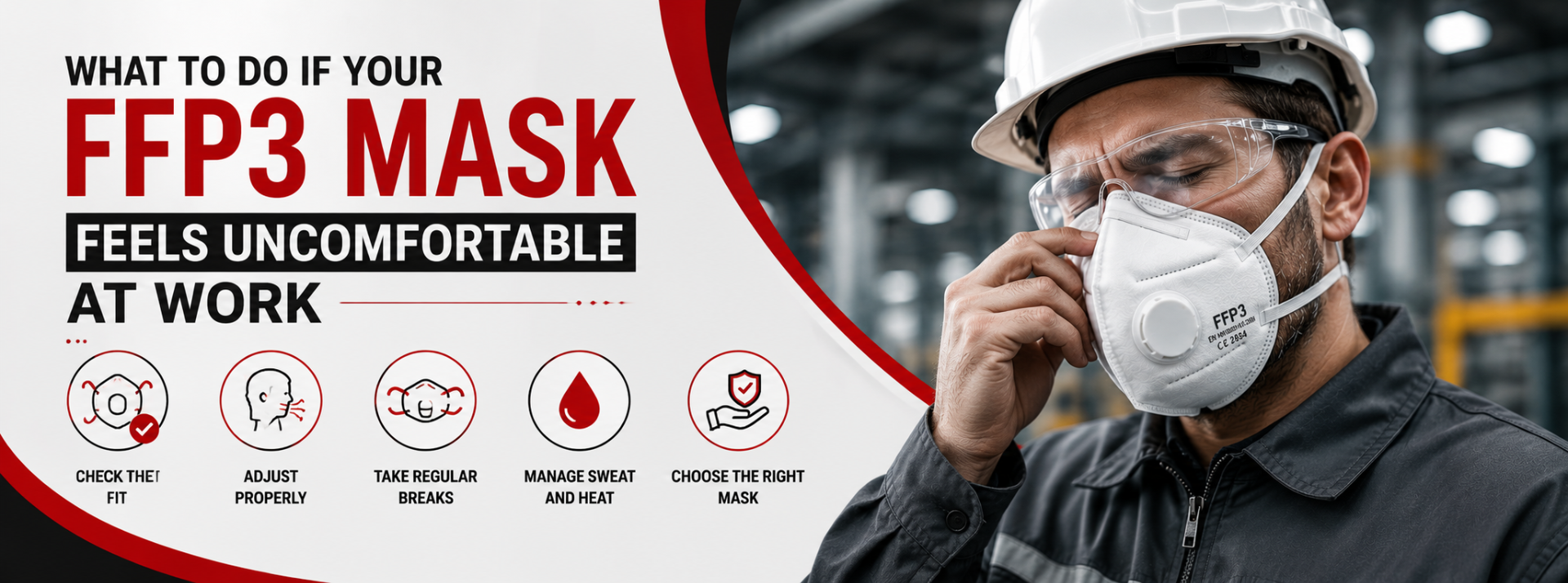
Most people experience discomfort while wearing an FFP3 mask for a long time at work. This urge to remove the respirator mask and wear it again, clean the sweat, and adjust the ear straps can make you feel comfortable with the mask.
Such behaviour does not just affect comfort; it compromises protection. Poor fit and prolonged discomfort are among the leading contributors to improper respirator use across UK workplaces. In fact, a recent study found that 40% of employees (20.9% of men and 19.1% of women) fail the fit test.
The good news is that discomfort is the result of an avoidable problem. It could be the wrong size, the wrong mask type for the work environment, or a wearing technique that creates pressure points and leaks. It means the solution usually starts with understanding why the discomfort is happening.
So, what should you actually do when your FFP3 face mask feels uncomfortable? Let’s find out.
Why Your FFP3 Mask Feels Uncomfortable
Discomfort while wearing your FFP3 mask is not a design flaw. It is a signal that something specific needs to change:
Poor Fit or Wrong Size
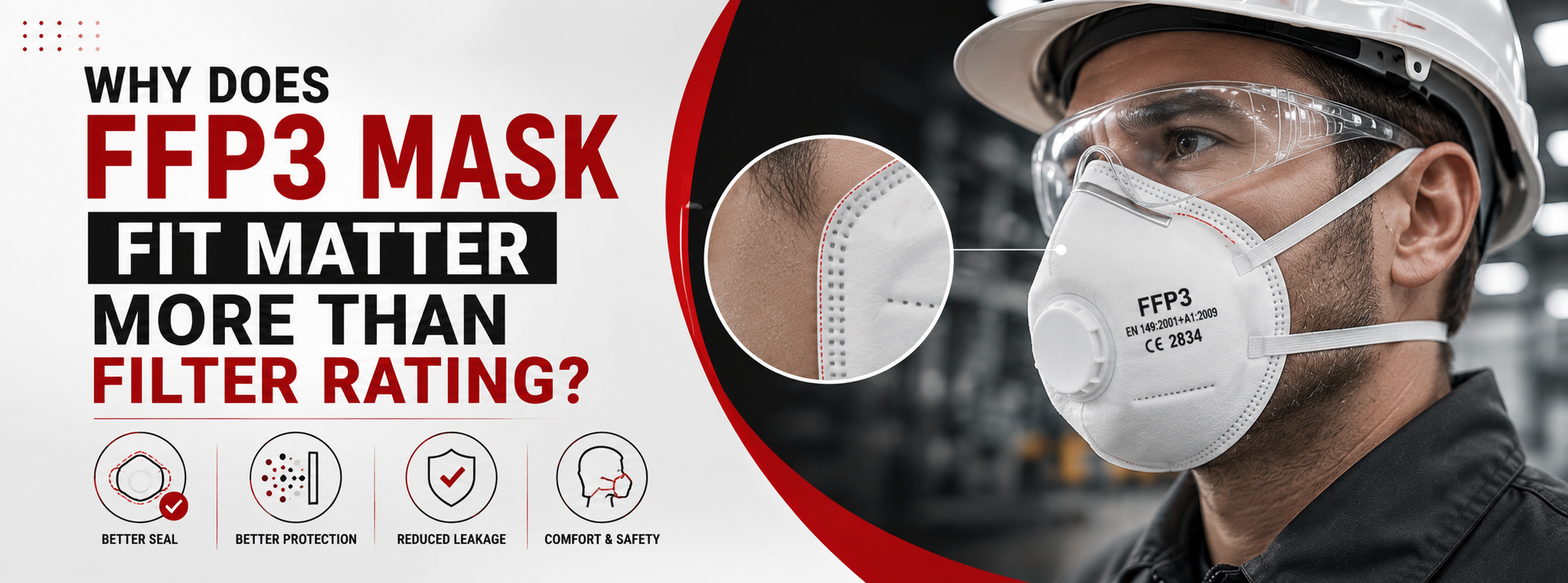
One of the main causes of experiencing discomfort while wearing an FFP3 Mask is the mismatch between the wearer’s face size and the size of the mask. If the mask is small, it will create tightness on the face, or if the mask is too big, then it will not provide the required protection, and the wearer will have to adjust the straps frequently. So, to ensure you wear the right mask according to your face, a fit test is essential.
Long Wearing Hours
Many users experience irritation and sweatiness when wearing an FFP3 respirator mask for a long time. Extended periods can create discomfort in breathing as the filter might accumulate particles or dust over time.
Low-Quality Materials
Low-quality FFP3 masks made using stiff materials, a thin nose foam, or a narrower strap design might be cost-effective. But these might not offer comfort while wearing.
Incorrect Wearing Technique
Tight straps of the FFP3 masks can cause irritation in the ears and headaches. Whereas masks with loose straps can create seal failures. Thus, identifying the perfectly fit FFP3 face mask is important for longer protection.
How to Make Your FFP3 Mask More Comfortable
You can make small adjustments to your FFP3 mask to ensure all-day comfort:
- Mould the nose clip with both hands simultaneously: Avoid using one hand as it creates an uneven seal and a friction point at the nose bridge. Always press and shape with both hands until the clip conforms fully to your face.
- Position the straps correctly: The upper strap should sit high at the crown; the lower strap should be at the nape of the neck. Never cross the straps. It reduces the pressure and alters the seal geometry.
- Take scheduled rest breaks: If you are working in a safe area, try to take a break without the mask, even for a shorter period. This way, you can reduce fatigue across your eight-hour shift.
- Try a different cup shape: Cup-style and flat-fold masks distribute pressure differently. If you find one of the masks to be uncomfortable in a specific area, try the other.
- Use moisture-wicking PPE liners: Thin liners reduce the accumulation of sweat and skin friction. This way, you can wear the mask comfortably for a long time, even in warm environments.
Choosing the Right FFP3 Mask for Comfort
If you are going to pick an FFP3 face mask that provides comfortable wearing, you should pay attention to the following aspects:
| Feature | Why It Matters for Comfort |
|---|---|
| Valved Design | Let's air out smoothly when you exhale. Stops heat and moisture from building up inside. |
| Contoured Cup Shape | Sits away from your nose and mouth. Spreads pressure evenly across the face. |
| Wide Nose Foam | Rests gently on the nose bridge. Holds a close fit without pinching or pressing. |
| Adjustable Straps | Lets you loosen or tighten to fit your head. No need to over-pull to get a secure seal. |
| Lightweight Construction | Does not drag down on the face during long shifts. Reduces strain on the jaw and neck over time. |
In addition, workers with facial hair find themselves at an even greater disadvantage. A regular FFP3 mask for beards cannot seal correctly against stubble. However, you can choose a powered air-purifying respirator (PAPR) designed as a loose-fitting hood or a clean-shaven seal.
When Discomfort Becomes a Safety Issue
Discomfort that causes a worker to adjust, remove, or avoid their mask is not a minor inconvenience; it is a direct safety failure. It is particularly dangerous if you are working in environments with airborne carcinogens, silica, or biological hazards. Watch out for these signs and address them before the next shift.
- The worker is regularly repositioning the mask during the working day.
- Red marks, pressure sores, or skin irritation are developing on the nose bridge or cheeks.
- They remove FFP3 masks early in hazardous areas or during short rest periods on site.
- Breathing difficulty is increasing faster than expected (especially due to filter saturation).
- The worker reports headaches with strap over-tightening.
Common Mistakes That Make Masks Uncomfortable
Here are some mistakes that employers and workers most commonly overlook during day-to-day RPE use.
- Wearing the wrong size: Most manufacturers offer at least two sizes. Make sure to try at least two sizes to help you identify which is the perfect size mask.
- Over-tightening the straps: A tight FFP3 mask does not mean that it is safe. Adjust the seal, nose-clip positioning, and strap pressure to ensure the mask is comfortable.
- Reusing disposable masks: A disposable mask should not be reused. These masks become unhygienic, non-compliant, and a compromised filter.
- Wearing the mask over incompatible PPE: Wearing a mask with thick frames, hearing protection, and accessories can impact the mask seal and create discomfort while wearing.
How to Wear an FFP3 Mask Properly
Most workers are not aware of the correct sequence of wearing an FFP3 mask. Follow these steps every time you put on your mask for better comfort and protection:
- Step 1: Inspect before wearing: Check for damage or missing straps, nose clip, and valves.
- Step 2: Cup the mask in your palm: Hold the facepiece with the nose clip at your fingertips and straps hanging below.
- Step 3: Position under the chin first: Place the mask against your chin and draw it upward over your nose and mouth.
- Step 4: Secure both straps: Upper strap high at the crown; lower strap at the nape of the neck. Do not cross straps.
- Step 5: Mould the nose clip with both hands: Press and shape the mask from the centre outward until the clip conforms to the nose bridge.
- Step 6: Perform a seal check: Cover the mask and exhale gently. Air escaping around the edges means the seal has failed. You need to readjust and repeat before entering the hazardous area.
Tips for All-Day Comfort at Work
Here are some tips to reduce your fatigue and enhance your comfort throughout your working shift.
- Hydrate well before putting on the mask: It will increase your breathing resistance during extended wear.
- Trim facial hair in the seal area: Even light stubble creates leak paths. A clean shave improves both comfort and protection.
- Store your mask correctly between uses: Keep masks in a sealed bag away from dust and moisture.
- Trial multiple mask models: Always try a range of masks in a Respirator Shop before committing to a standard to avoid long-term discomfort.
- Ensure formal fit testing is in place: A formally fit-tested FFP3 respirator mask is always more comfortable. Fit testing is also a legal requirement under COSHH Regulations 2002.
Conclusion
Discomfort in an FFP3 face mask is not something workers should simply endure. It is a signal that something in the fit, technique, or product choice needs to change. When you let it go unnoticed, it will lead to genuine protection failures in environments where the risks are real. The right respirator mask, whether a full-face, half mask or a 3 m face mask, which is correctly fitted and properly worn, should be wearable for a full shift without constant discomfort.
FAQs
Q1. Why does my FFP3 mask feel uncomfortable?
The most common causes are poor fit, the wrong size, incorrect strap positioning, or a nose clip that has not been moulded properly. A formal fit test helps you choose the FFP3 mask that suits your face.
Q2. How can I make my FFP3 mask more comfortable at work?
Mould the nose clip with both hands, and position both straps correctly. If possible, you can take scheduled rest breaks in a safe place.
Q3. Is it normal for an FFP3 mask to feel tight?
Some initial firmness is normal. But if you feel tightness or headaches, over time, it could be due to the over-tightened straps or a poor fit. In such a case, try a different size or model of FFP3 respirator mask.
Q4. Which FFP3 mask is best for long working hours?
Valved FFP3 masks with contoured cup shapes, wide nose foam, and adjustable straps perform best for long working hours.
Q5. Can wearing an uncomfortable mask affect safety?
Yes. Any discomfort that causes a worker to adjust, lower, or remove their FFP3 mask during a shift means there is a gap in their protection. In hazardous environments, even short-term exposure has real risk.