One of the best ways to protect yourself from hazardous airborne particles is by wearing an FFP3 mask. Whether you work on a construction site, a chemical factory, or in an industrial setting, the right FFP3 dust mask can ensure proper respiratory protection.
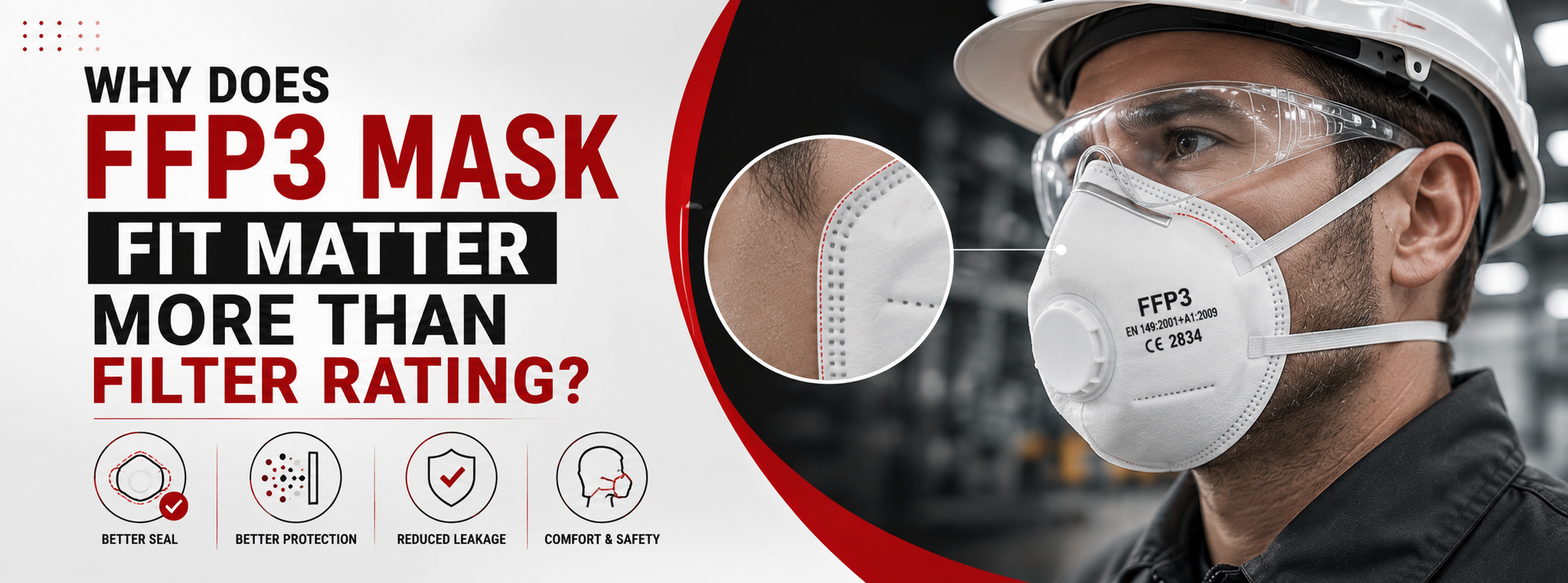
However, when it comes to validating the mask for a fit test, many workers feel surprised that even high-quality FFP3 masks fail the face fit test. That means even if your mask feels tight and comfortable, if it fails a fit test, it allows hazardous particles to enter, thus negating the safety aspect of the mask.
The good news is that most mask fit test failures can be corrected by choosing the right mask, making adjustments, and performing the fit test at the right time. Let’s explore some of the top reasons why an FFP3 face mask fails a fit test, and which are some of the best FFP3 masks that offer enhanced protection and fit.
Understanding The FFP3 Face Mask Fit Test
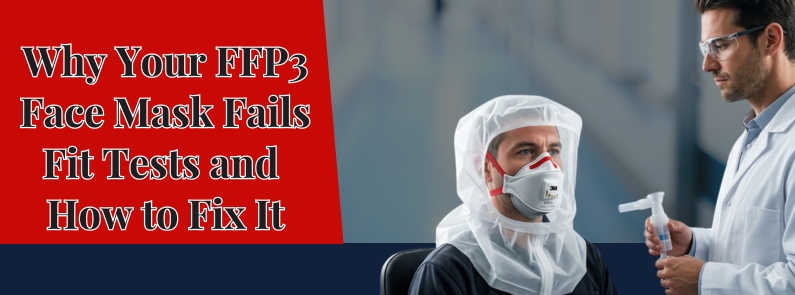
A fit test determines if a tight-fitting respirator (like a reusable N95 or half-face type) creates an adequate seal with the user's face. If a respirator does not have a secure seal, contaminated air will enter through the gaps around the edges of the mask.
Fit tests can be performed in two ways:
- Qualitative Fit Test (QLFT): based on your response to the irritation of the taste or smell of some substance, such as saccharin or an aerosol with a bitter taste
- Quantitative Fit Test (QNFT): This involves measuring the amount of leakage into the respirator using a quantitative device.
Why Do FFP3 Masks Fail Fit Tests So Often?
A person may fail a facial fit test for many reasons. Facial hair is one of the most frequent causes. Air can seep into the mask due to inadequate sealing caused by beards, stubble, and even little facial growth. Let us go through a few other reasons why this can happen:
Incorrect Size or Form
If the shape of the FFP3 dust mask does not fit your face, it may feel snug yet still not work. Multiple sizes and the right fit testing are important since polluted air can seep in through even the smallest gaps around the nose or cheeks.
Mask Wear and Damage
Respirators become less dependable with time. Even if the mask passed a prior fit test, bent nose clips, strained straps, or warped edges can prevent the mask from sealing correctly.
Movement While Using
Since real labour is rarely static, fit testing frequently involves speaking, bending, and head motions. The respirator's seal can rupture and allow airborne particles inside if it moves.
Changes in the Face's Form
Changes in weight, dental work, surgery, or ageing can subtly alter facial contours. A mask that fit flawlessly a year ago might not offer the same degree of security now.
Unsuitable Wearing Method
If a high-quality mask is worn improperly, it is useless. Protection can be compromised by loose straps, incorrect placement, or neglecting seal checks, which is why appropriate training is crucial.
How to Tell If Your FFP3 Face Mask Does Not Fit Properly
When used properly, an FFP3 mask should feel stable, safe, and sealed. If the FFP3 mask leaks air, moves while in motion, or requires frequent adjustment, then the protection it offers is impaired, despite the level of quality the mask has.
Remember to observe the following red flags when conducting a face fit test:
- Glasses fog in seconds.
- Air escapes close to the cheekbones or nose.
- The mask is removed when talking or bending over.
- Straps are to be adjusted constantly.
- There is an odd odor or dust is inhaled.
The changes in equipment or changes in facial features might interfere with the RPE’s ability to seal against the face. There will be less protection offered to the wearer in case of a faulty seal.
When Should You Take a Face Fit Test?
Fit testing should not be seen as a single procedure. Moreover, it should not be regarded as a one-time event, either; the effectiveness of respiratory protective equipment (RPE) in workplaces should be continuously evaluated.
Face fit test kit should be reviewed regularly for a number of reasons, which include:
- A major dental procedure that changes the structure of the face.
- Changes in weight.
- Facial scars or deformity from an accident. It includes surgery aimed at changing the shape or contour of the face.
- Changing to a different face mask manufacturer or model.
This emphasises how crucial it is to make sure that RPE is appropriately sized, fitted, and worn in a manner to produce a dependable seal.
Are Reusable Respirators Better Than Disposable FFP3 Masks?
For brief or infrequent use, disposable FFP3 masks are lightweight and practical. However, reusable respirators frequently provide a more dependable seal, greater durability, and improved long-term comfort in harsh industrial settings. These respirators usually have a stronger face seal, removable filters, and adjustable straps.
Additionally, they cut down on daily waste and work better throughout long periods when throwaway masks could become tense or lose their shape. Here are a few reasons why you should consider switching to the reusable ones.
| Feature | Disposable FFP3 Masks | Reusable Respirators |
|---|---|---|
| Usage | Single-use | Long-term use |
| Fit and Stability | Moderate | More secure |
| Comfort | Short-duration | Better for long shifts |
| Cost Over Time | Repeated purchases | More cost-efficient |
| Environmental Impact | More waste | Less waste |
| Maintenance | None | Requires cleaning |
PRO TIP: For workers who struggle to pass fit tests with disposable FFP3 masks, regular mask users, or high-exposure workplaces, a sundstrom mask can be a good choice.
Best FFP3 Masks for Better Fit and Protection
Choosing between a reusable half mask with P3 filters and an FFP3 face mask is a popular question, particularly in dusty occupations, sanding, construction work, do-it-yourself renovations, and higher-risk areas. These situations require severe respiratory protection.
Here are a few options you can go for:
- Ultimate Valved Fold Flat FFP3 Masks: The Ultimate Valved Fold Flat FFP3 Masks have EN149-certified protection, a flexible face seal, and adjustable straps. They are made to fit comfortably and provide protection from asbestos exposure, fine dust, and other particles.
- Flat-fold FFP3: These individually wrapped Fold Flat FFP3 masks combine high-filtration protection with little storage. They are easier to wear comfortably for lengthier industrial or dust-heavy operations because of their valved design, which helps decrease heat accumulation.
- FFP3 Non-Valved: With a breathable three-panel design that easily fits a variety of facial shapes, the HY9330 Non-Valved FFP3 Mask provides superior respiratory protection. It is commonly trusted in high-risk and healthcare settings and is individually packaged for hygiene.
Summing Up
Although failing a face fit exam can be disheartening, it is essential for spotting possible safety hazards. Facial hair, the incorrect size mask, wearing practices, and faulty equipment are the most frequent causes of failure. But you can take the appropriate actions to address these problems and increase their chances of passing by understanding why failures happen.
Protecting against airborne threats requires an FFP3 mask that fits properly, and addressing fit concerns can have a big impact on worker safety. Explore a diverse range of options from protective FFP3 masks for beards to full-and half-faced FFP3masks only at Respirator Shop.
FAQs
Why does my FFP3 mask fail a fit test even though it feels tight?
Even if your mask is tight, if the fit is not proper, it will fail the fit test as it allows contaminated air to seep in via tiny spaces around the nose, beard, or cheeks. Fit tests measure airflow rather than comfort.
How often should an FFP3 face mask be fit tested?
Usually, once a year, although it can also happen whenever your face changes. The seal may be affected by changes in weight, dental work, scars, or even a change in mask brand.
What is the difference between an FFP3 mask and a dust mask?
A simple dust mask primarily blocks only larger particles. FFP3 masks follow stringent testing and integrate filters that can prevent even exceedingly small and dangerous particles to entery your body.
Are reusable respirators easier to fit than disposable FFP3 masks?
Yes, most of the time. Reusable respirators are more adaptable to various facial shapes than flat disposable masks because they often feature adjustable straps and structural seals.
What happens if an FFP3 mask does not fit properly?
The filter is rendered nearly useless. Because air uses leaks rather than the filter material as a shortcut, dangerous particles might still enter your lungs.